Los Olivos Wine Tasting: The Walkable Village Guide
The Los Olivos District became a federal wine appellation in 2016, yet the town it is named for is small enough to cross on foot. Here is how a tasting day there actually works.
Short answer
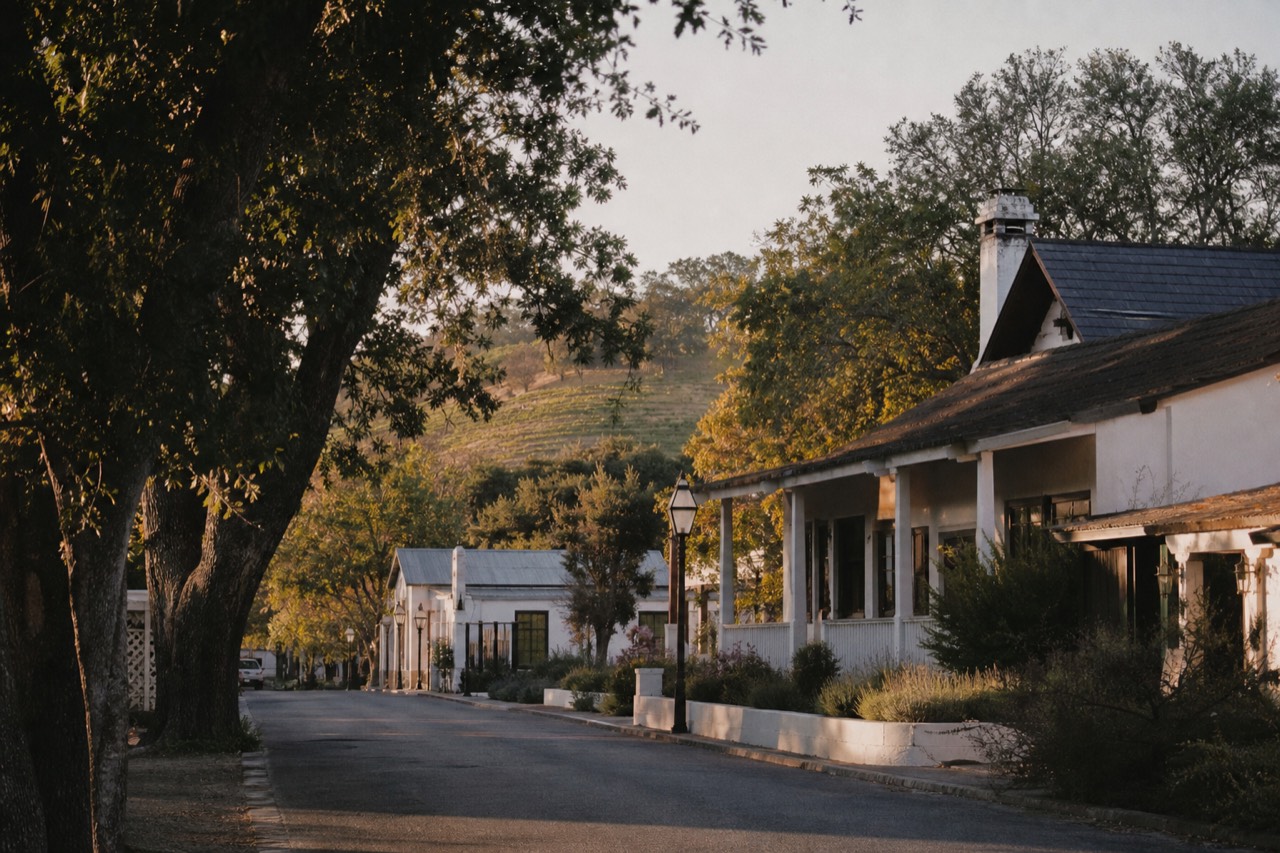
Los Olivos wine tasting means walking between tasting rooms in a compact inland village about forty-five minutes from the coast. A few square blocks hold one of the county's densest clusters of cellar doors, so you can taste on foot, though rural estates nearby still need a car or a tour.
The Los Olivos District earned its federal wine appellation in 2016, the county's sixth, and the town it is named for is small enough to walk end to end before your parking meter would run out. That mismatch is the whole appeal. A place this small holds one of the densest clusters of tasting rooms in Santa Barbara County, close enough together that you can leave the car, settle in, and taste on foot for an entire afternoon.
Los Olivos is where the scattered Santa Ynez Valley finally lines up on a single grid. Out in the surrounding canyons, the estate wineries sit far apart on ranch roads, appointment-only and impossible to string together without a driver. Here in the village, the cellar doors face each other across the street. This guide covers how a Los Olivos tasting day works in practice: what the rooms pour, what a flight really costs, when you need a reservation, how to reach the town from the coast, and where a guided day still earns its place even in a town you can walk.
What is wine tasting in Los Olivos like?
Wine tasting in Los Olivos means strolling between tasting rooms clustered in a few walkable blocks, rather than driving between far-flung estates. Standard flights of four or five pours run around $20 to $35, walk-ins are common outside peak times, and the rooms pour the wider valley's range, from cool Pinot Noir to warm Rhône and Bordeaux reds.
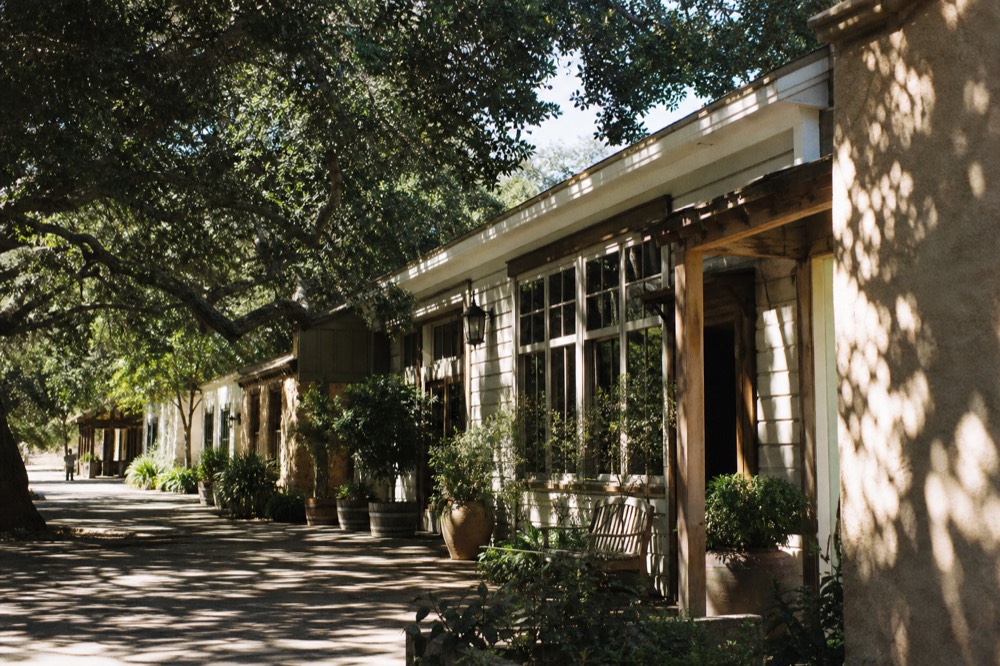
The village works the way a good wine town should. You park once, and the rest of the afternoon happens on foot. Tasting rooms sit side by side along the main streets, many of them the downtown outposts of estates whose vineyards lie miles away in the canyons. That arrangement is the reason Los Olivos gets recommended so often to first-timers: it delivers the variety of the valley without the logistics.
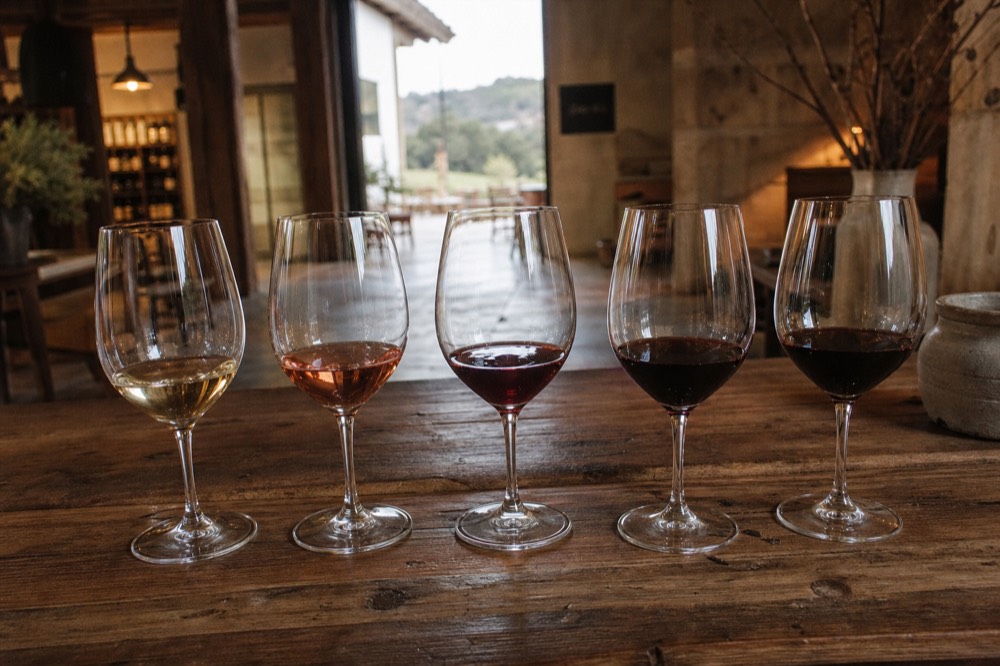
What you taste leans on where the surrounding fruit is grown. Because the coastal mountains here run east to west and let Pacific fog pour inland, the valley grows both delicate, cool-climate wines and muscular warm-climate reds, and the Los Olivos rooms pour across that whole span. One counter might focus on Rhône varieties like Syrah and Grenache, the next on Pinot Noir from the fog-cooled hills to the west, the next on Bordeaux reds from the warmer canyons east of town. The village is a sampler of the entire region compressed into a short walk.
| What Los Olivos gives you | Detail |
|---|---|
| Walkable density | A cluster of tasting rooms across a few blocks, crossed on foot |
| Range in one place | Rhône, Bordeaux and cool-climate wines poured within a short walk |
| Casual entry | Walk-ins common outside peak weekends, no estate appointment needed |
| Food close by | Cafes, a deli and restaurants among the rooms for a mid-tasting break |
| The catch | Rural estates nearby still need a car or a driver to reach |
If you would rather have the whole day arranged than pair a shuttle ride with your own room-by-room plan, the firm-price guided day below is the longer, more arranged option.
Which tasting rooms should you visit in Los Olivos?
Los Olivos rewards a plan built around what you like to drink, not a fixed list. The rooms cluster by style: Rhône and Syrah specialists, Pinot Noir and Chardonnay houses pouring fruit from the cooler west, and Bordeaux-focused rooms working the warmer canyons. Pick three or four in a style you enjoy and you have an afternoon.
Because the tasting rooms change hands and menus over the years, the honest way to choose is by grape and by mood rather than by a frozen ranking. The village keeps evolving: Strange Family Vineyards opened a room here in early 2025, part of a steady churn that keeps the lineup fresh. Rather than send you chasing a specific name that may have moved, it helps to sort the rooms by the kind of wine they pour, then walk to whichever ones match.
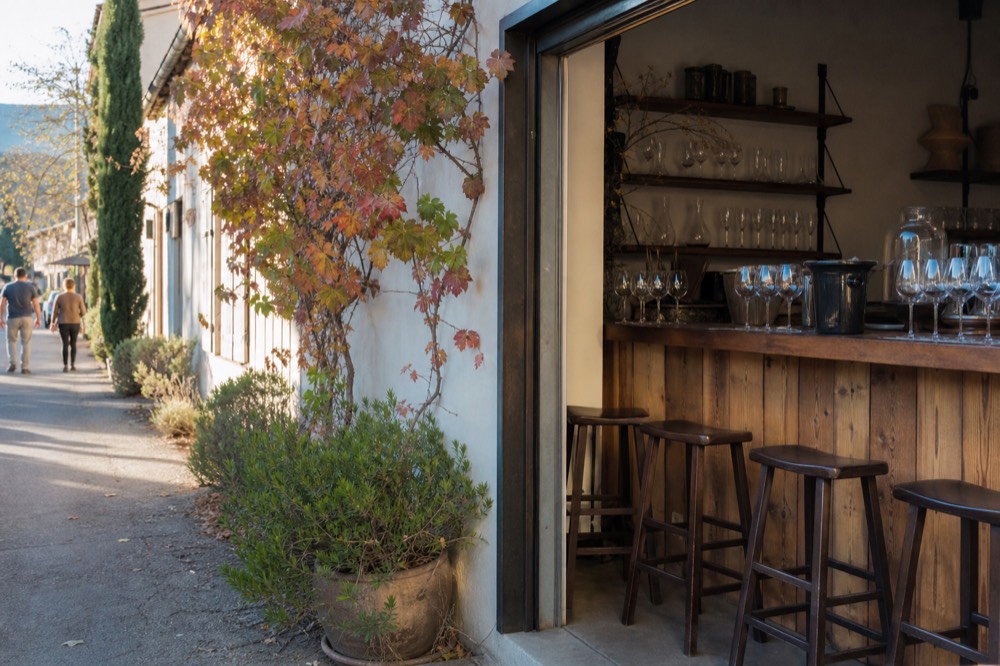
The pattern below holds across most visits. Start with a lighter, cool-climate room to wake up your palate, move to the fuller reds as the afternoon warms, and break for food somewhere in the middle so you are not tasting on an empty stomach. That rhythm matters more than any single cellar door.
| If you want to taste | Look for rooms pouring | Why it suits the village |
|---|---|---|
| Cool-climate whites and Pinot | Chardonnay and Pinot Noir from the western hills | A gentle, aromatic start to the day |
| Rhône reds | Syrah, Grenache and Rhône blends | The valley's signature warm-climate style |
| Bordeaux reds | Cabernet Sauvignon, Cabernet Franc, Sauvignon Blanc | Bigger structure from the hotter canyons east of town |
| A bit of everything | Rooms with a broad flight or two labels | The whole valley sampled in one short walk |
For a fuller map of which cellar doors sit in which town across the wider valley, our guide to the valley's wineries town by town lays them out by appellation, and the roundup of the best wineries to visit in the county sorts them by what each does well. If you are torn between village stops and the country estates, the piece on whether Los Olivos is worth the trip weighs the town against the drive.
How much does wine tasting cost in Los Olivos?
Budget roughly $20 to $35 for a standard flight of four or five wines in Los Olivos, and $35 to $50 or more for reserve or estate-level pours. Many rooms waive the fee if you buy a bottle. Across three or four rooms, plan on $60 to $130 a person for tastings alone, before food, tips and any wine you take home.
Los Olivos sits at the friendlier end of the county's pricing, on par with Solvang and the city's Funk Zone rooms. A standard flight in the walkable towns commonly runs $20 to $30 for four or five wines, climbing when you step up to reserve flights or single-vineyard pours. The number that surprises people is not any single fee, it is the total once you add up several rooms across an afternoon.
The math is simple but easy to underestimate. Three rooms at $30 each is $90 before you have eaten or tipped, and a fourth pushes it past $100. Set against that, a guided day that folds fees and lunch into one price can look like the better deal once you count everything, which is exactly why the all-inclusive format exists. The table below breaks down where the money goes on a self-guided Los Olivos afternoon.
| Cost | Typical range | Notes |
|---|---|---|
| Standard tasting flight | $20 to $35 | Four or five wines, walkable-town rate |
| Reserve or estate flight | $35 to $50+ | Single-vineyard or library pours |
| Fee waiver | Often with a bottle purchase | Thresholds vary by room |
| Lunch | $20 to $40 | Cafes and restaurants among the rooms |
| Tips | 15 to 20 percent | Standard where a host pours for you |
Prices move, so treat these as planning allowances and check the current fee at the room. If cost is the deciding factor, our blog on what a day of tastings really costs walks through the fees stop by stop. And the cheapest guided way to reach the village is the shared shuttle from the city, from $139 per person: you can check the dates and what it covers on the operator's live listing, which solves the drive without folding in lunch or fees.
Do you need reservations for Los Olivos tasting rooms?
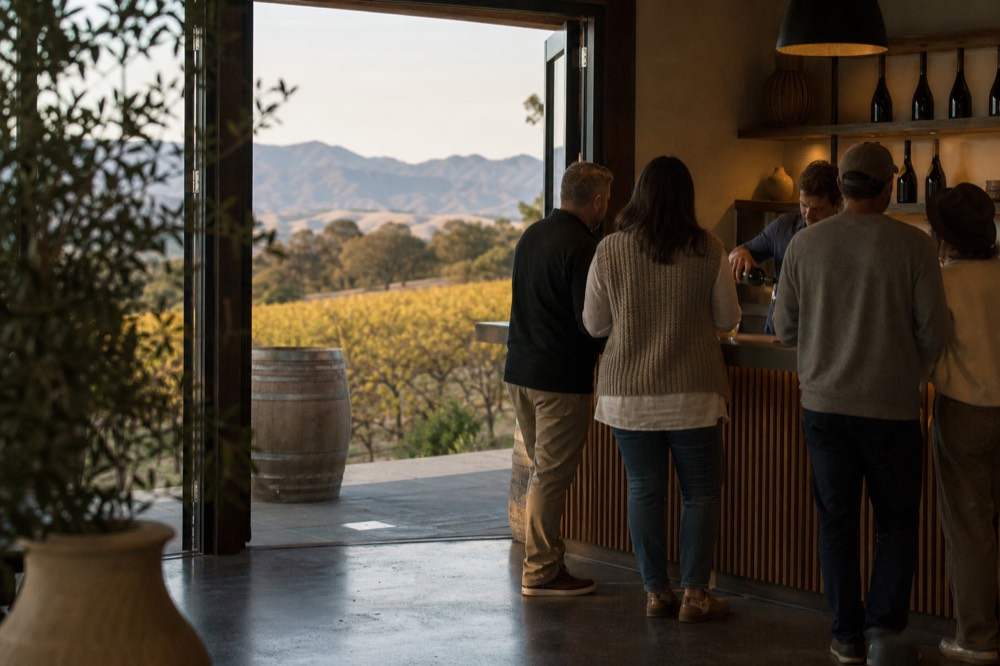
Walk-ins are still normal in Los Olivos, which is one of its main draws. You can wander in and taste at many rooms without booking ahead, especially on weekdays and outside peak season. Larger groups, seated tastings and busy weekend afternoons are the exceptions where a reservation is smart, and the rural estates outside the village increasingly require one.
This is where the village pulls ahead of the countryside. Out on the ranch roads, seated appointments have become the norm, and turning up unannounced at a remote estate often means a locked gate. In town, the older, more casual model survives. Many Los Olivos rooms will pour for a couple or a small group that walks in off the street, no call required.
The caveats are worth knowing. Peak weekends in fall, holiday stretches and any group larger than about six are the cases where a quick reservation saves you standing around. Seated, structured tastings usually want a booking even in town. And if your plan includes a specific estate out in Ballard Canyon or Happy Canyon, assume you need an appointment and possibly a car to get there. The table sorts the reservation picture by where you are tasting.
| Where you are tasting | Reservation | Reality |
|---|---|---|
| Los Olivos walk-in rooms | Rarely needed | Wander in, especially midweek |
| Seated or structured tastings in town | Recommended | Book a slot, even in the village |
| Peak weekends and large groups | Recommended | Call ahead to avoid a wait |
| Rural estates outside town | Often required | Appointment-only, and you need a car or a tour |
The upshot is that Los Olivos gives you the rare freedom to improvise, while the estates around it do not. That split is the reason many visitors pair a walkable morning in town with a booked estate visit, or hand the whole thing to a guide. Our fuller guide to how a tasting day actually works covers seated versus walk-in and tipping, and the blog on whether you need reservations across the county goes room-type by room-type.
How do you get to Los Olivos from Santa Barbara?
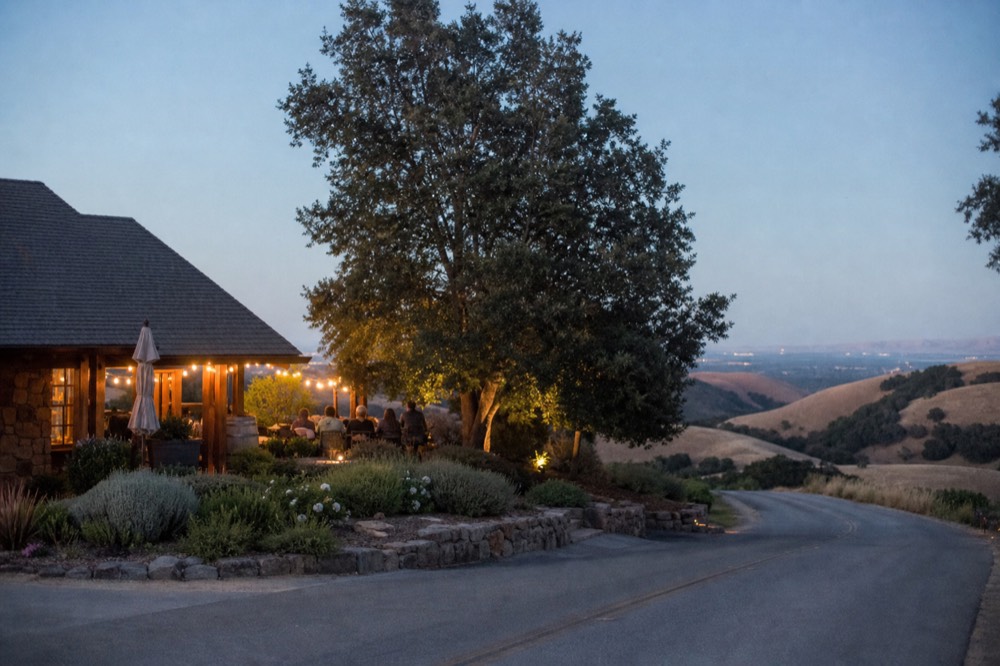
Los Olivos sits about 35 miles and 45 to 50 minutes inland from Santa Barbara, most directly over Highway 154, the scenic San Marcos Pass across the coastal range. Highway 101 is a longer coastal loop of similar distance. From Los Angeles the drive is about two hours. There is no train to the village, so you arrive by car, shuttle or guided tour.
The two routes up from the coast are a real choice, not just a formality. Highway 154 climbs the San Marcos Pass over the Santa Ynez Mountains, a shorter and more scenic mountain road that drops you into the valley near Santa Ynez and Los Olivos. Highway 101 swings out along the coast through Gaviota before turning inland, a similar total distance but a less direct loop. Most tours take the pass for the views.
The reason this matters for a tasting day is the drive itself. You are climbing and descending a mountain pass at each end of an afternoon spent tasting wine, which is precisely the scenario where a designated driver stops being optional. California sets the legal limit at 0.08 percent blood alcohol under Vehicle Code section 23152, and a full afternoon of flights adds up well past a single glass. The table lays out the ways in.
| From | Distance | Time | Route |
|---|---|---|---|
| Santa Barbara city | About 35 miles | 45 to 50 minutes | Hwy 154 San Marcos Pass, or Hwy 101 |
| Solvang | About 10 miles | 15 to 20 minutes | Local valley roads |
| Los Angeles | About 129 miles | Around 2 hours | Hwy 101 north |
| Ventura | Shorter than LA | Under 2 hours | Hwy 101 north |
If you are staying in the city without a car, the door-to-door and shuttle options do the driving for you. Our guide to reaching the valley from the coast compares the pass against the 101 loop in detail, and the blog on how far the wineries really are puts numbers on every leg. For a firm-price guided day that handles the whole route, the six-to-eight-hour small-group option publishes a rate up front.
What wine is the Los Olivos area known for?
The Los Olivos District and the wider Santa Ynez Valley are known for range rather than a single grape. The area's rooms pour Rhône varieties like Syrah and Grenache, Bordeaux reds and Sauvignon Blanc from the warmer canyons, and Pinot Noir and Chardonnay grown in the cooler hills to the west. The village is where all of it converges.
Los Olivos sits at a crossroads of the valley's growing zones, which is why its tasting rooms feel so varied. The Los Olivos District appellation itself leans toward Rhône and Bordeaux styles, but the rooms in town pour far beyond their own district, carrying fruit from across the county's seven federal appellations. Those appellations, recorded with the federal tax and trade bureau, span a cool-to-warm gradient created by that unusual east-west run of the mountains.
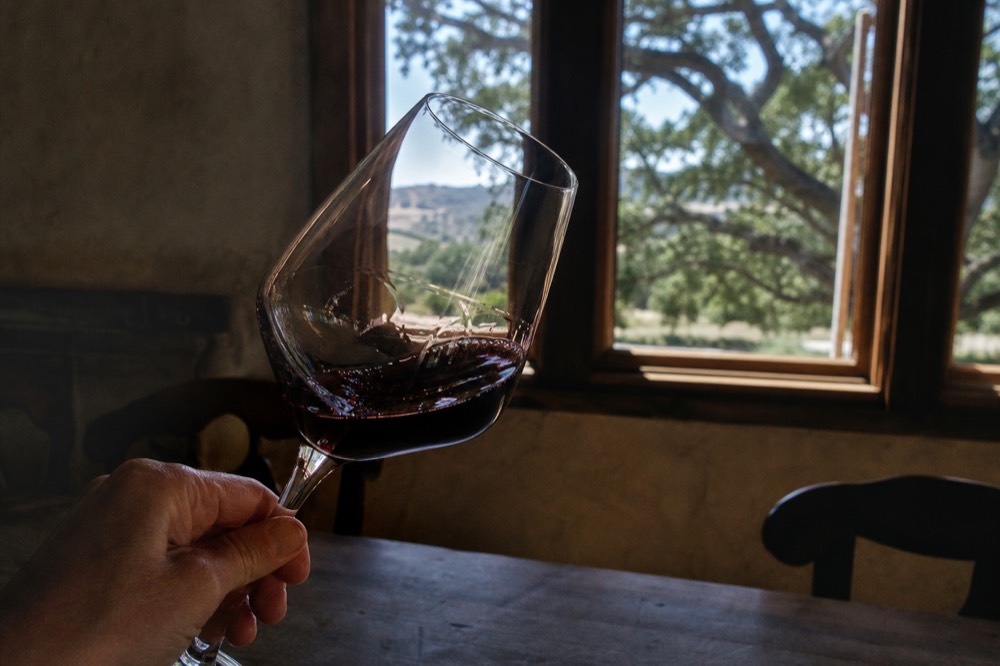
The geography does the work. Fog pours in from the Pacific through the transverse valleys, keeping the western end cool enough for Burgundian Pinot Noir and Chardonnay, while the eastern canyons bake warm enough for Cabernet Sauvignon. Los Olivos, roughly in the middle, is the natural meeting point where a single afternoon can cross that entire spectrum. The table sorts the county's growing zones so you can read a Los Olivos flight against where its wines come from.
| Appellation | Climate | Signature wines |
|---|---|---|
| Sta. Rita Hills | Coolest, fog-swept west | Pinot Noir, Chardonnay |
| Santa Maria Valley | Cool | Pinot Noir, Chardonnay, Syrah |
| Ballard Canyon | Warm middle | Syrah and other Rhône reds |
| Los Olivos District | Diverse, cool to warm | Rhône and Bordeaux blends |
| Happy Canyon | Hottest, dry east | Cabernet Sauvignon, Sauvignon Blanc |
For a deeper look at why one valley grows such different wines, our blog on what this valley is really known for gets into the varietal geography, and the county winery overview maps all seven appellations end to end. Los Olivos is the easiest single place to taste across them.
When is the best time to taste in Los Olivos?
September through November is the sweet spot, with warm days, cool evenings and harvest energy in the rooms. Summer is busiest and brings the biggest crowds, winter is quiet and low-priced, and spring gives green hills at shoulder-season value. Los Olivos rooms keep regular hours year-round, so timing is about atmosphere, not availability.
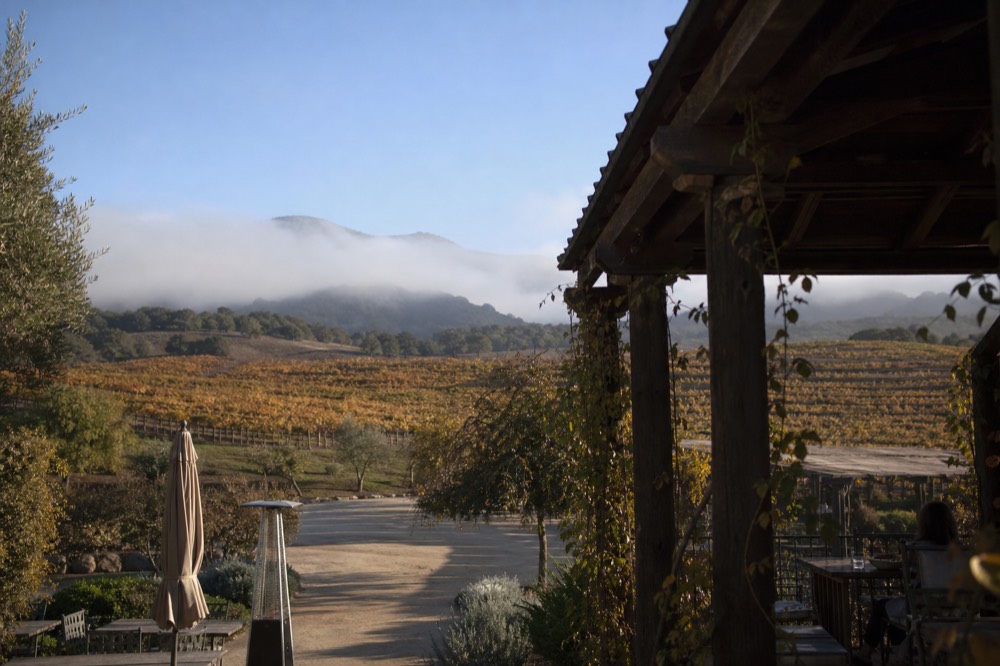
The village is open for business all year, which turns the calendar into a question of mood and crowd rather than access. Fall is the classic window. Harvest and crush run from late August into October, the rooms feel alive with fruit coming in, and the inland valley weather is at its most settled, warm afternoons giving way to cool nights.
Summer is peak season across the whole region, so expect busier rooms and book seated tastings ahead. The coast can sit under a morning marine layer that locals call May Gray and June Gloom, though the inland valley usually burns off warmer and drier than the shore, an advantage for a Los Olivos day. Winter is the quiet, wallet-friendly stretch, with unhurried rooms and softer light. The table lays out the trade-offs.
| Season | Weather | Crowds | Why go then |
|---|---|---|---|
| September to November | Warm days, cool nights, harvest color | Busy on event weekends | Fall light and harvest buzz in the rooms |
| June to August | Warm inland, coastal morning fog | Peak | Long days, everything open, book ahead |
| December to February | Cool, green, occasional rain | Quietest | Lowest prices, unhurried tastings |
| March to May | Mild, green hills | Building | Wildflowers and shoulder-season value |
If your dates are flexible, our month-by-month look at when to visit the wine country goes deeper on weather and events. Los Olivos also anchors several of the small wine towns worth stringing together, which our roundup of the valley's cute wine towns covers if you want to make a route of it.
Is it better to walk Los Olivos or take a tour?
For the village itself, walking wins: the rooms are close together, walk-ins are common, and you set your own pace. A tour earns its place on the parts Los Olivos cannot solve, the mountain drive up from the coast and the appointment-only estates in the surrounding canyons. Many visitors combine both, walking the town and riding to and from it.
This is the honest tension of a Los Olivos day. Inside the village, a tour would only get in the way. The pleasure of the place is exactly the freedom to drift from room to room, linger over a flight you like, and change your mind about lunch. No guide improves on that.
The trouble is everything around the village. The estates out on the ranch roads are dispersed and not walkable, they increasingly want a reservation, and the drive to reach the town from the coast climbs a pass at each end of a day spent tasting. That is where a shuttle or guided day does real work, keeping everyone able to taste and taking the wheel over the mountain. This is the way we frame it at Santa Barbara Wine Tours: use a driver for the parts that need one and your own two feet for the parts that do not. The table sets the two approaches side by side.
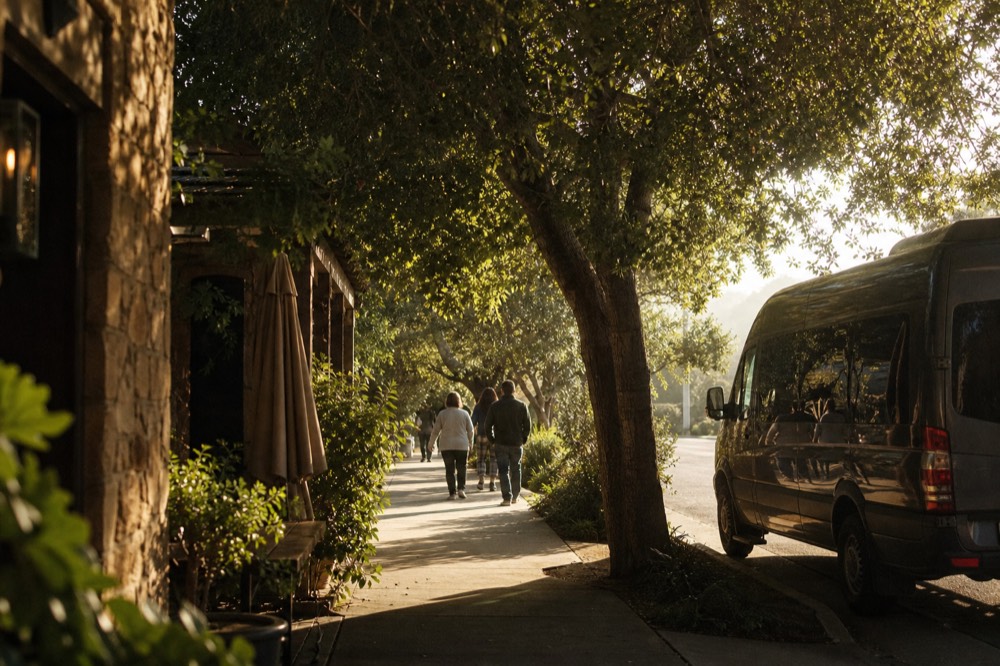
| Consideration | Walk it yourself | Shuttle or guided day |
|---|---|---|
| Inside the village | Total freedom, best on foot | Redundant, the rooms are close |
| The San Marcos Pass drive | You drive it, twice | Handled for you |
| Rural estates nearby | Book and drive each yourself | Arranged in advance |
| Who stays sober | One of your party misses out | Everyone tastes |
| Total cost, small group | Fuel, parking, fees, sober driver | One price, sometimes lunch and fees in |
The practical answer for most people is a hybrid: get driven up and back, then walk the village at your own pace once you arrive. The cheapest guided way to do that is the shared shuttle from the city, and the deeply reviewed all-inclusive day folds lunch and fees into a single price if you would rather not tally cellar-door charges at all. Whichever you pick, the walkable heart of Los Olivos is yours once you step out of the vehicle, and most listings cancel free up to 24 hours out.
Common questions about Los Olivos wine tasting
Is Los Olivos good for wine tasting?
Yes. Los Olivos holds one of the densest walkable clusters of tasting rooms in Santa Barbara County, packed into a few blocks you can cross on foot. The rooms pour across the whole valley's range, from cool-climate Pinot Noir to warm Rhône and Bordeaux reds, and walk-ins are common outside peak times.
How much does wine tasting cost in Los Olivos?
A standard flight of four or five wines runs about $20 to $35, with reserve and estate pours from $35 to $50 or more. Many rooms waive the fee with a bottle purchase. Across three or four rooms, plan on roughly $60 to $130 a person for tastings alone, before food and tips.
Do you need reservations for Los Olivos tasting rooms?
Often not. Walk-ins are still normal at many Los Olivos rooms, especially on weekdays and outside peak season. Reservations are smart for seated tastings, larger groups and busy fall weekends, and the rural estates outside the village increasingly require an appointment and a car to reach.
How far is Los Olivos from Santa Barbara?
Los Olivos is about 35 miles and 45 to 50 minutes inland from Santa Barbara, most directly over Highway 154, the scenic San Marcos Pass. Highway 101 is a longer coastal loop of similar distance. From Los Angeles the drive is around two hours, about 129 miles. There is no train to the village.
Should you drive to Los Olivos or take a tour?
Walk the village itself, since the rooms are close together and walk-ins are common. Take a shuttle or guided day for the parts Los Olivos cannot solve: the mountain drive up from the coast and the appointment-only estates nearby. California's legal limit is 0.08 percent, so a driver keeps everyone tasting.
What wine is Los Olivos known for?
The Los Olivos area is known for range rather than one grape. Its rooms pour Rhône varieties like Syrah and Grenache, Bordeaux reds and Sauvignon Blanc from the warmer canyons, and Pinot Noir and Chardonnay from the cooler western hills. The village sits where the valley's cool and warm growing zones meet.
Reserve Your Los Olivos Wine Day
Have a travel date in mind? Check availability and pickup details now, before arranging the rest of the trip. Nothing is charged on this site, and most listings cancel free up to 24 hours out.
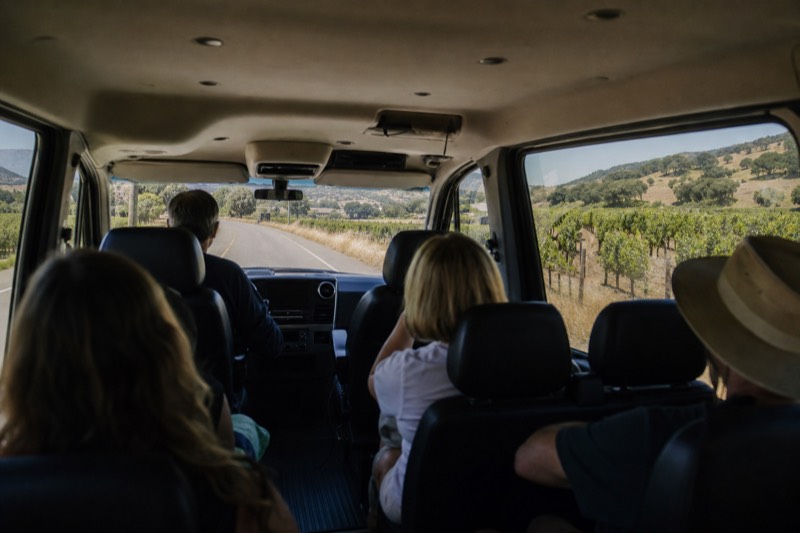
Santa Ynez Valley Wine Shuttle
from $139 · 12 reviews on the listing · About 7 hours
The cheapest guided way up to the village, from $139: the shuttle handles the San Marcos Pass both ways, and if its loop includes the village, Los Olivos itself is walkable once you arrive.
Transport only: no lunch or tasting fees are included, and it departs from Santa Barbara, so it suits visitors based on the coast rather than in the valley.
Compare two alternatives inside this module
All-Inclusive Santa Ynez Valley Wine Tour
Santa Ynez: Wine Country Tour
Tailor the pick: where you start and what matters most
Two questions, honest matches from the real listings. General guidance, not live inventory: confirm dates and restrictions on the listing.
Santa Ynez Valley Wine Shuttle
The cheapest guided way up to the village, from $139: the shuttle handles the San Marcos Pass both ways, and if its loop includes the village, Los Olivos itself is walkable once you arrive.
Cost check: compare your itemized village day with a guided day
Enter your own totals in dollars; the site does not invent prices. Include driving costs and tasting fees on the self-planned side.
The difference is what the reservations, the pass drive and a sober driver add or save on top of the village's tasting fees. Check dates on the listing before you decide; nothing is charged on this site.