Santa Barbara Urban Wine Trail: A Walkable Guide
Roughly twenty tasting rooms sit within about thirteen blocks of the Santa Barbara waterfront. Here is how to walk them, what a flight costs, and where a guide helps.
Short answer
The Santa Barbara Urban Wine Trail is a walkable cluster of around twenty downtown tasting rooms, most in the Funk Zone near the waterfront and the Amtrak station. You taste valley-grown wine without a car or a drive, moving between rooms on foot, with fees usually running $20 to $35 a flight.
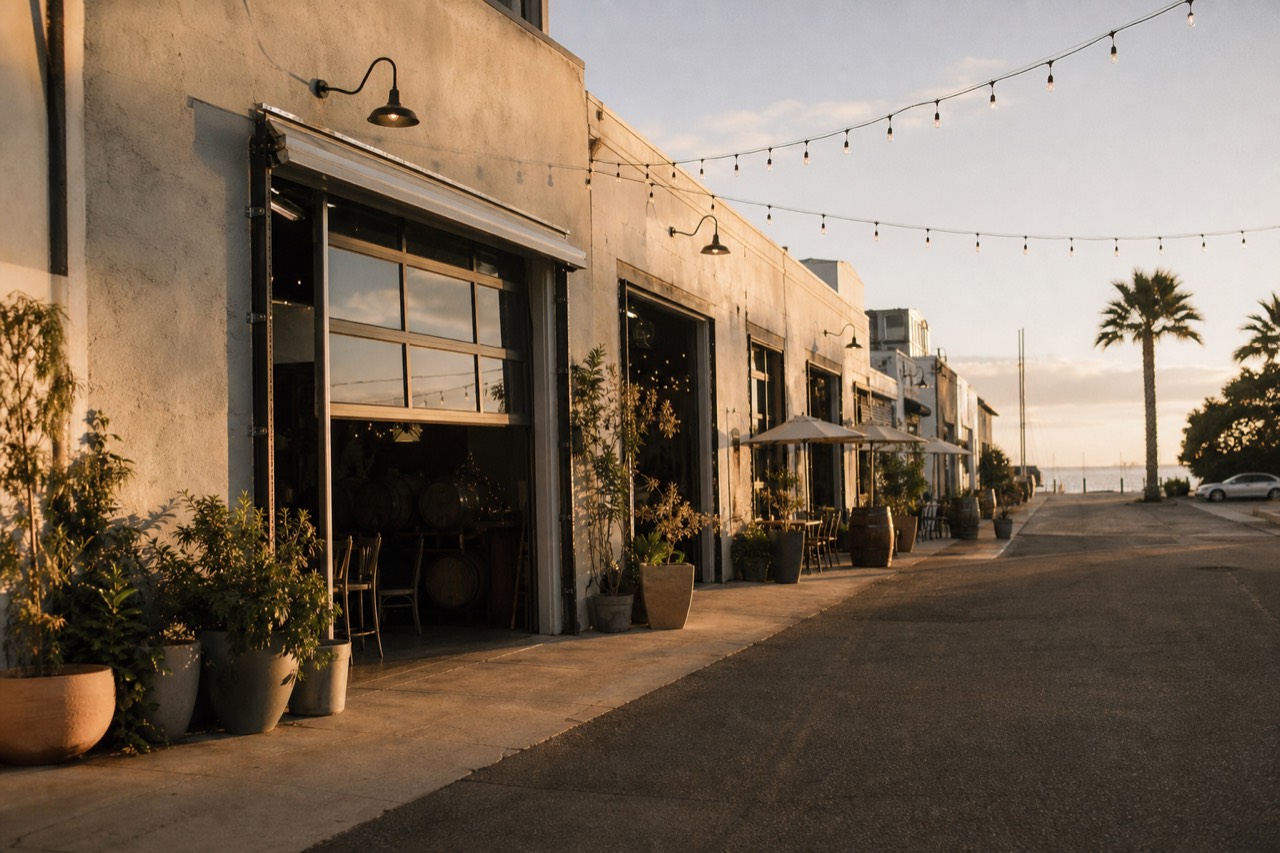
Roughly twenty tasting rooms sit within about thirteen blocks of the Santa Barbara waterfront, close enough that you can pour through an entire afternoon and never touch a car. That is the quiet trick of the Santa Barbara Urban Wine Trail: the vines grow forty minutes inland, but the wine comes to the coast, poured in converted warehouses and storefronts a short walk from the sand and the train platform. The dense heart of it is the Funk Zone, a compact grid between Highway 101 and the ocean that turned from fish-processing sheds and auto shops into the county's most concentrated stretch of cellar doors.
For a visitor without a rental car, this is the easiest wine day in the whole region. No mountain pass, no designated-driver problem, no forty-minute transfer each way. You step off the Pacific Surfliner, walk a few blocks, and start tasting. This guide lays out how the trail actually works: how many rooms there are, what a flight costs, which guided walks thread them together, and how a downtown afternoon stacks up against a full day out in the Santa Ynez Valley.
What is the Santa Barbara Urban Wine Trail?
The Santa Barbara Urban Wine Trail is a self-guided route linking around twenty tasting rooms in the downtown area, most clustered in the Funk Zone near the waterfront. It lets you taste wine grown in the inland valleys without driving to them. The rooms sit within easy walking distance of each other, the beach and the Amtrak station.
The trail is not a single building or a fenced attraction. It is a loose association of independent tasting rooms, each pouring its own label, spread across a walkable downtown footprint with the densest run in the Funk Zone. Some are polished lounges, some are bare-bones counters inside working warehouses, and the range is part of the appeal. You can plot your own path between them or let a guided walk decide the order.
What makes it work is geography. Most of the rooms fall inside a roughly thirteen-block district hemmed by the freeway and the ocean, which means the walk between any two of them is measured in minutes, not miles. According to the trail's own map of the rooms, the cluster has held steady around twenty for years even as individual rooms open and close. The table below sets out the basics before the detail.
| Feature | The Urban Wine Trail |
|---|---|
| Rooms on the trail | Around twenty downtown tasting rooms |
| Where they cluster | The Funk Zone, near the waterfront |
| Footprint | Roughly thirteen walkable blocks |
| Car needed? | No, walkable from the beach and Amtrak |
| Typical flight fee | About $20 to $35 |
| Reservations | Walk-ins normal, groups should book |
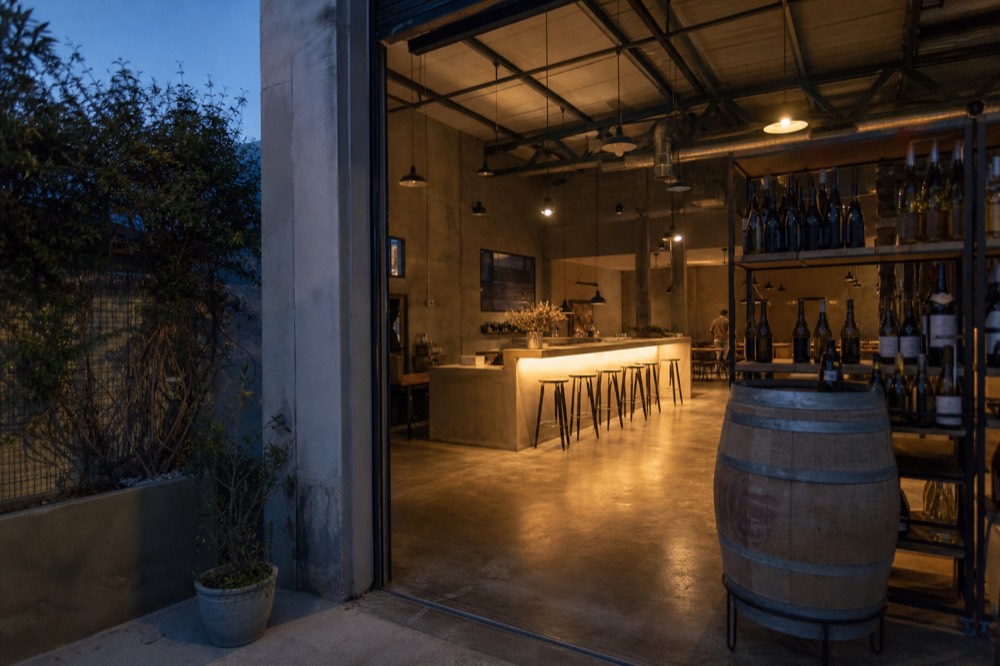
The wine you taste here is mostly grown elsewhere. The county's vineyards sit in the Santa Ynez Valley and the cooler appellations to the west, so a Funk Zone room is really an outpost of an inland winery, a place to pour and sell without the drive. That is the honest framing to carry into your afternoon: the city gives you the tasting, the valley gives you the vines. If you want to see how the two halves of the county's wine scene fit together, our overview of how the valley tour days compare covers the inland side in full.
Before you plot a route on foot, here are the three ways most people actually do the Funk Zone: a guided history-and-chocolate walk, a sparkling-focused walk, or a shuttle out to the valley if you decide the city is not enough.
How many tasting rooms are on the Urban Wine Trail, and where is the Funk Zone?
The Urban Wine Trail links about twenty tasting rooms, with the densest run inside the Funk Zone, a roughly thirteen-block neighborhood between Highway 101 and the waterfront. It is a short, flat walk from the downtown beach and the Amtrak station, so you can taste your way across the district on foot without ever needing a car.
The Funk Zone earned its name honestly. It was a scruffy industrial pocket of warehouses, boatyards and auto shops before the tasting rooms, galleries and breweries moved into the cheap square footage, and the rough-edged character stuck even as the rents climbed. That backstory is worth knowing before you go, and we traced how the Funk Zone got its name in full for anyone curious about the district's past life.
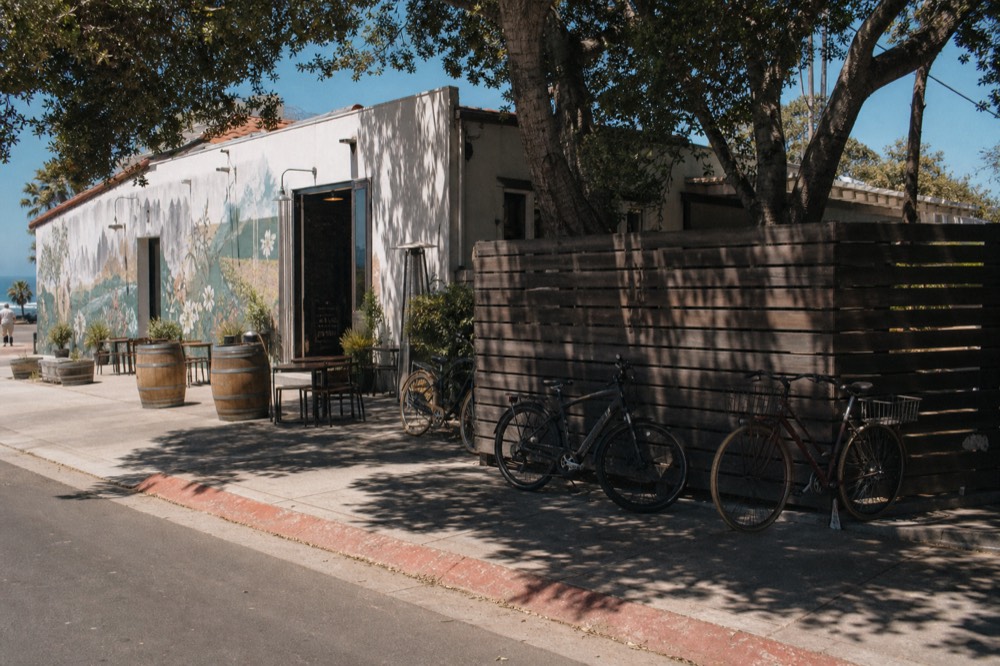
The walkability is the selling point. From the sand at the bottom of State Street, the core of the trail is a few minutes on foot, and the Pacific Surfliner train drops you close enough that day-trippers from Los Angeles and San Luis Obispo can arrive without a car at all. Inside the district, rooms sit a block or two apart, so a group can drift from one to the next at its own pace. Compare that to the inland estates, which are scattered across ranch roads where you cannot walk between anything, and the appeal of the city trail for a carless visitor is obvious. The layout below sorts the district by what sits where.
| Part of downtown | What you find | Walk from the beach |
|---|---|---|
| Funk Zone core | The densest run of tasting rooms | A few minutes |
| Near the Amtrak station | Rooms handy for train arrivals | Right there |
| Lower State Street | Rooms mixed with bars and food | Short walk |
| Waterfront edge | Beach, then the trail begins | You start here |
Because everything is close, the practical decision is not how to get between rooms but how many you can taste properly before the pours catch up with you. Three or four rooms is a full, honest afternoon for most people. Trying to hit all twenty in a day turns a pleasure into a chore, and the walkability that makes the trail easy also makes it easy to overdo.
How much does tasting cost on the Urban Wine Trail?
Tasting fees on the Urban Wine Trail usually run $20 to $35 for a flight of four or five pours, similar to the walkable valley towns. Reserve or estate-level flights climb to $35 to $50 or more. Many rooms waive the fee if you buy a bottle, so a purchase at your favorite stop can pay for the tasting.
Cost is the first thing people underestimate, because a single flight looks cheap until you multiply it across an afternoon. Four rooms at thirty dollars a head is a hundred and twenty dollars per person before you have bought a bottle or eaten lunch, and that adds up quietly. The honest way to plan is to budget per person for the whole afternoon rather than fixating on one room's sticker.
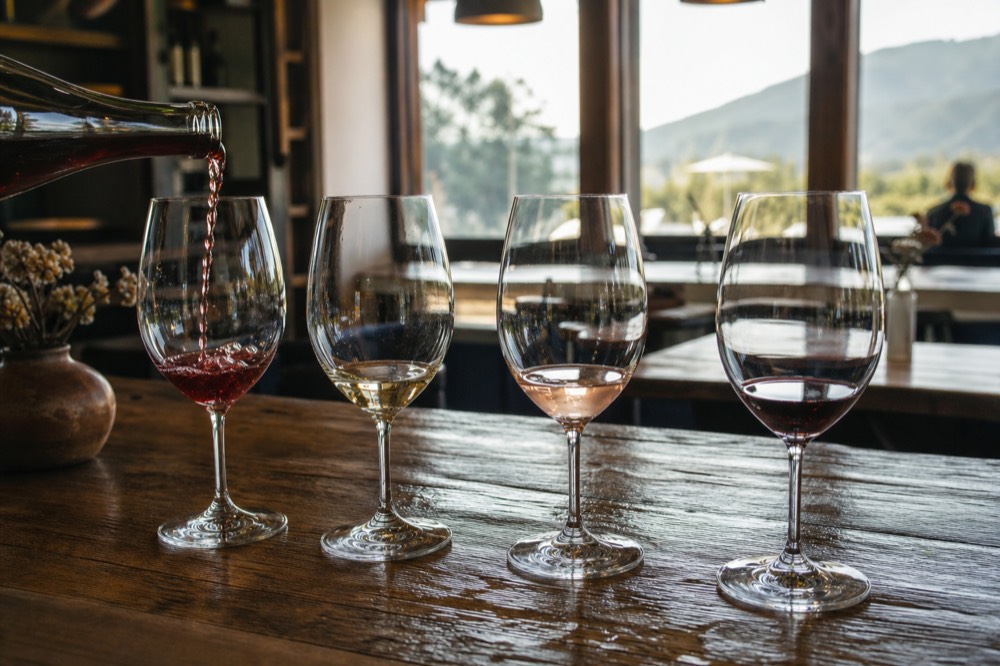
The fee structure mirrors the rest of the county. Standard flights in the walkable rooms cluster in the low-to-mid twenties and thirties, while a reserve flight or a room pouring older estate wines asks more. The single best money-saving move is the bottle waiver: buy a bottle you like and many rooms knock the tasting fee off, which effectively makes the tasting free if you were going to buy anyway. The table below sets out the ranges you should expect to plan around, framed as planning allowances rather than fixed prices, since every room sets its own.
| Flight type | Rough fee per person | What you usually get |
|---|---|---|
| Standard flight | About $20 to $35 | Four or five pours of core wines |
| Reserve or estate flight | About $35 to $50 or more | Older or limited pours, sometimes seated |
| With a bottle purchase | Fee often waived | The tasting cost comes off your bottle |
| Guided walking tour | From about $135 | Several rooms, tastings and a guide in one price |
If cost is the thing shaping your whole trip, our full breakdown of what a day of tastings actually costs walks through fees, tips and lunch room by room, and it applies to the city trail as much as the valley. The short version for the Funk Zone: budget around a hundred dollars a head for a relaxed three-room afternoon, less if you buy bottles and claim the waivers.
Which walking wine tours cover the Funk Zone?
Two guided walking tours cover the Funk Zone: a wine, chocolate and history walk and a sparkling-wine walk, both from $135 per person and both run on foot without a car. Each strings together several downtown rooms, folds the tastings into one price, and adds a guide who knows the district's past and its current pours.
Self-guiding the trail is easy, but a guided walk buys you three things a map does not: the tastings arranged in advance, a route that skips the weaker rooms, and someone to explain what you are drinking and where the neighborhood came from. For first-timers, or anyone who would rather not decide, that is worth the price of admission.
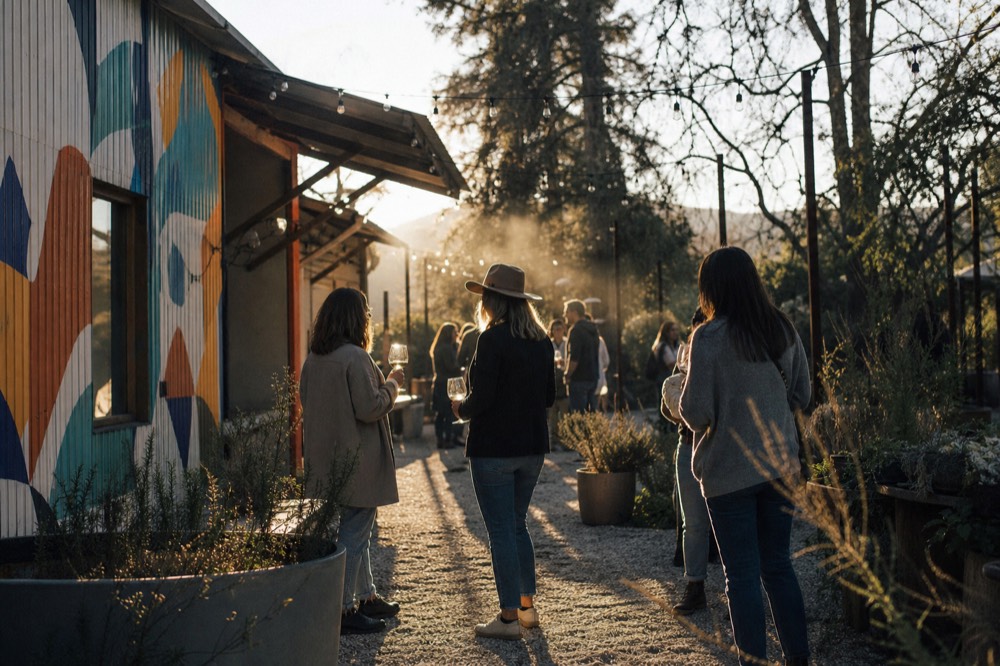
The wine, chocolate and history walk is the one to book if you want context with your pours. It moves through several Funk Zone rooms on foot, pairs tastings with chocolate, and layers in the district's story as you go, all from $135 per person. It is a newer listing with a light review history so far, which is why we quote the firm starting price rather than a star average, but the format is a clean fit for a first visit. You can check the dates and what it covers on the operator's live listing.
If bubbles are more your thing, the sparkling-wine walking tour takes the same on-foot approach through the district and centers the afternoon on sparkling pours, also from $135 per person. It is likewise a smaller, newer listing, so we hold back a rating and show the real starting price instead. Between the two, the choice is simply whether you want the broader history-and-chocolate framing or the sparkling focus. The comparison below lays them side by side.
| Walking tour | Focus | Starting price | On foot? | How to read it |
|---|---|---|---|---|
| Wine, chocolate & history walk | Pours, chocolate and district history | From $135 | Yes, no car | Newer listing, firm price, no star average |
| Sparkling-wine walk | Sparkling-focused tasting route | From $135 | Yes, no car | Newer listing, firm price, no star average |
| Self-guided | Your own order and pace | Fees at each room | Yes, no car | Cheapest, but you arrange everything |
Both walks solve the same small problem: the trail is easy to walk but hard to curate, and twenty rooms is too many to judge cold. A guide turns a sprawling list into a shaped afternoon. At Santa Barbara Wine Tours we point you to the real, bookable version of the day rather than leaving you to guess which of twenty doors is worth your first flight.
Should you walk the Urban Wine Trail or head to the Santa Ynez Valley?
Walk the Urban Wine Trail if you have no car, limited time or a taste for a city-and-beach day. Head to the Santa Ynez Valley if you want to see the vines, ranch estates and small wine towns where the wine is actually grown. Many visitors do both: a Funk Zone afternoon on arrival and a full valley day after.
This is the real fork in a Santa Barbara wine trip, and neither answer is wrong. The city trail is convenience and atmosphere; the valley is scenery and origin. What you should not do is assume the Funk Zone is a lesser version of the valley, because it is a different experience rather than a diluted one. You trade vineyard views for walkability and a drive for a stroll.
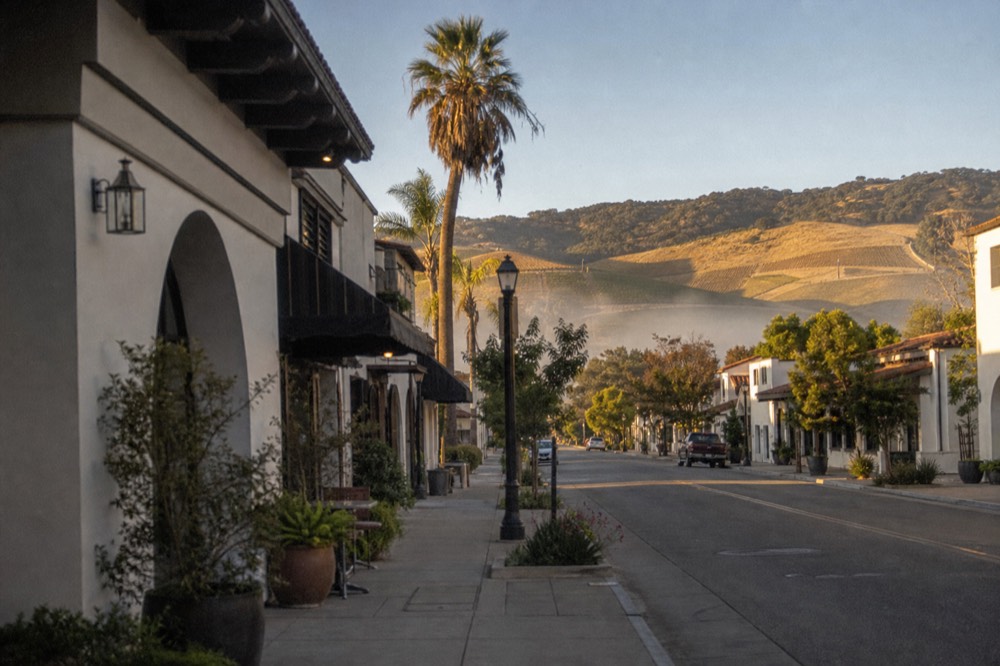
The valley is where the vines grow, spread across ranch roads that are not walkable and increasingly want a reservation, which is exactly why guided valley days exist. The Funk Zone asks none of that: walk in, taste, move on. For a first-timer with one afternoon, the trail is the low-friction choice. For anyone who wants to understand the region, a day among the vines is worth the forty-minute drive each way. The table below sorts the two on the things that decide it.
| What matters | Urban Wine Trail | Santa Ynez Valley |
|---|---|---|
| Car or driver | Not needed, fully walkable | Needed, estates are dispersed |
| Scenery | City streets, waterfront | Vineyards, oak hills, ranch estates |
| Time commitment | An afternoon | A full day, drive included |
| Reservations | Mostly walk-in | Often required at estates |
| Best for | No car, short on time, beach day | Seeing where the wine is grown |
If you are staying in the city without wheels but still want to reach the vines, a shuttle bridges the gap by handling the drive out to the valley and back. Our guide to getting up to the valley from the coast compares the routes and the door-to-door options, and the valley day below is the fuller way to make the trip, with lunch and the tasting fees folded in.
What wine will you actually taste on the trail?
On the Urban Wine Trail you taste the full range of Santa Barbara County wine, because each room pours the label of an inland winery. Expect cool-climate Pinot Noir and Chardonnay from the fog-swept western appellations, Syrah and Rhône reds from the warmer canyons, and Bordeaux varieties from the hot eastern edge, all in one walkable district.
The county's geography does something unusual. Its mountains run east to west rather than north to south, so Pacific fog pours straight inland and cools the western vineyards while the eastern canyons bake. That single quirk, mapped across the county's seven federal wine appellations, is why one small county grows both delicate Pinot Noir and muscular Cabernet. In the Funk Zone, you taste the results of all of it without leaving the block, because the rooms represent wineries from every corner.
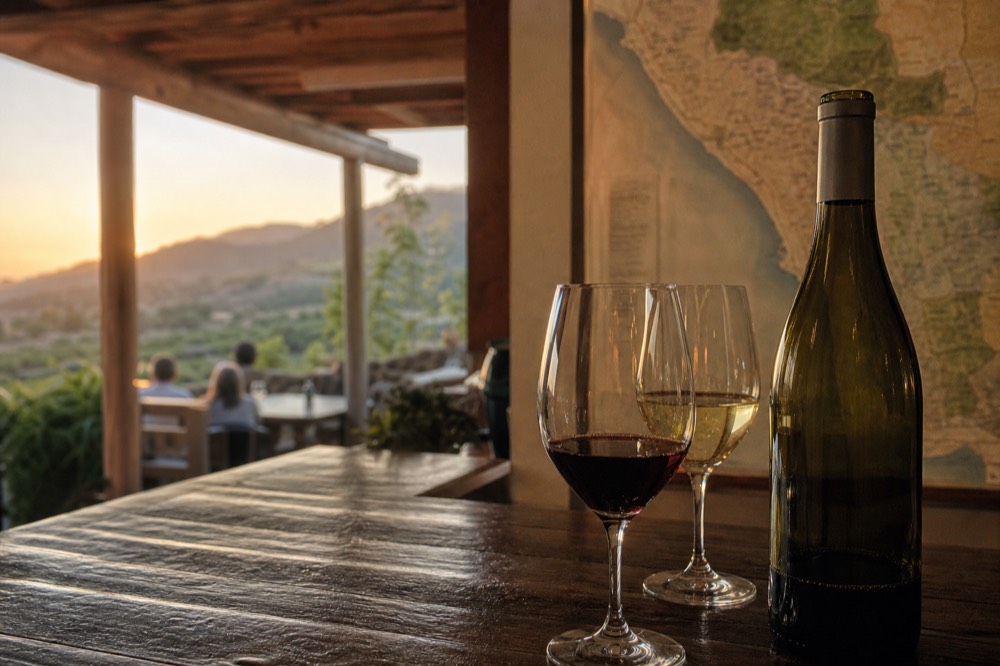
For a taster, this is the trail's underrated advantage. Instead of driving from a cool western estate to a hot eastern one to understand the range, you can taste a fog-grown Pinot and a sun-baked Cabernet two rooms apart. The table below sorts the county's wine by where it grows, so you know what you are drinking as you move down the block.
| Appellation | Climate | What it grows | You will taste it as |
|---|---|---|---|
| Sta. Rita Hills | Coolest, fog-swept west | Pinot Noir, Chardonnay | Bright, Burgundian |
| Santa Maria Valley | Cool | Pinot, Chardonnay, Syrah | Elegant, red-fruited |
| Ballard Canyon | Warm middle | Syrah and Rhône reds | Dark, peppery |
| Happy Canyon | Hot, dry east | Cabernet, Sauvignon Blanc | Full, structured |
That spread is also why a guided walk can teach you more in three hours than a solo crawl. A good guide will steer you from a cool-climate white to a warm-canyon red on purpose, so the afternoon becomes a tour of the county's geography rather than a random sample. If varietals are what pull you, our look at how the valley tour days compare gets into which wineries are worth reaching once you head inland.
What should you know before you walk the trail?
Before you go, know three things: most Funk Zone rooms take walk-ins, but larger groups should book; tasting fees are usually $20 to $35 and often waived with a bottle; and the trail keeps shifting as rooms open and close. Pace yourself to three or four rooms, and remember the Amtrak station is right there if you skip the car.
The Funk Zone is forgiving in a way the valley is not. You can turn up without a plan, walk into most rooms, and figure it out as you go. The main caveat is group size: a couple can walk in almost anywhere, but a party of six or more should call ahead or book a guided walk, because the rooms are small and a large group can overwhelm a counter.
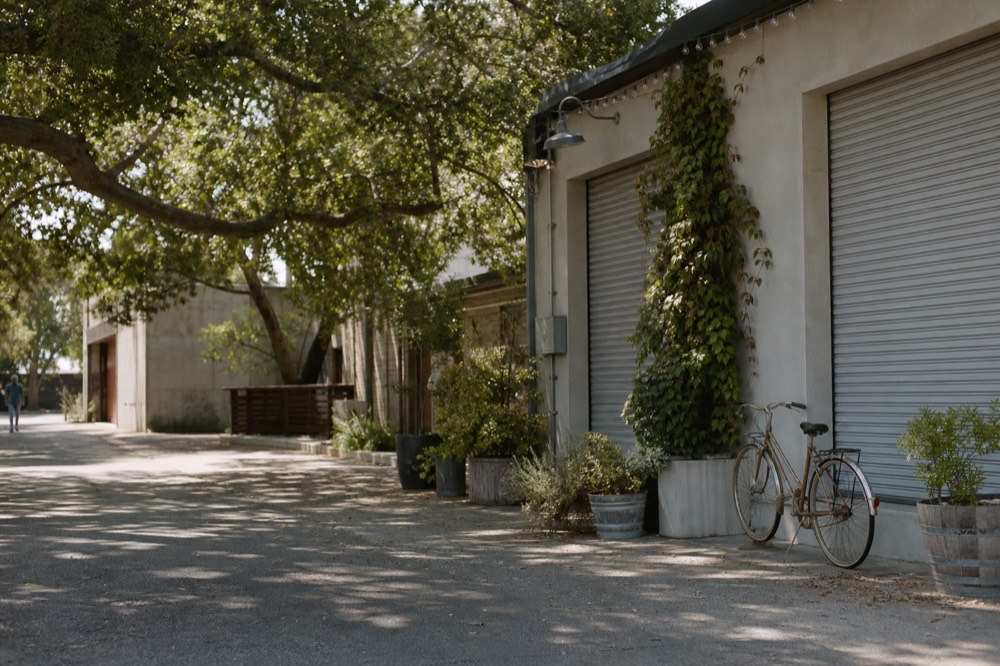
The other thing to carry is that the trail is a living scene, not a fixed monument. Rooms move, close and open with the market. Over the 2025 to 2026 winter, two long-standing Funk Zone rooms shut their doors while new lounges opened elsewhere in the area, and one winery announced a move to a different downtown block. None of that breaks the trail, which has stayed around twenty rooms for years, but it does mean a list you find online can be a season out of date. The trail's own map and a room's current hours are the sources worth checking, and for reservations specifically, our guide to whether you need to reserve ahead lays out which rooms take walk-ins and which want a booking. The checklist below covers the rest.
| Before you go | The honest answer |
|---|---|
| Do you need reservations? | Walk-ins are normal; groups of six-plus should book |
| How many rooms in a day? | Three or four is a full, honest afternoon |
| How do you save money? | Buy a bottle where you like the wine; the fee is often waived |
| Do you need a car? | No, the district is walkable from the beach and Amtrak |
| Is the room list stable? | Around twenty rooms, but individual rooms change |
One last practical note on getting there. Because the trail sits beside the Pacific Surfliner station, it is genuinely doable as a car-free day trip from Los Angeles, Ventura or San Luis Obispo. You arrive by train, walk to the rooms, taste, and walk back, which sidesteps the whole designated-driver question that shapes a valley visit. For the fuller picture of a downtown tasting day, from tipping to seated versus walk-in, see our guide to how a Santa Barbara tasting day works. Visit Santa Barbara keeps a current overview of the downtown wine scene for planning around events and openings.
Whichever way you play it, hold a date while the weather is on your side: most listings here cancel free up to 24 hours out, so checking costs nothing.
Common questions about the Santa Barbara Urban Wine Trail
How many tasting rooms are on the Santa Barbara Urban Wine Trail?
The Urban Wine Trail links around twenty tasting rooms across the downtown area, with the densest run inside the Funk Zone. Individual rooms open and close over time, but the cluster has stayed around twenty for years, all within a short walk of each other and the waterfront.
Is the Funk Zone walkable, and do you need a car?
The Funk Zone is fully walkable and you do not need a car. Most rooms sit within about thirteen blocks between Highway 101 and the waterfront, a short flat walk from the beach and the Amtrak station, which makes it an easy car-free day trip from Los Angeles or Ventura by train.
How much does it cost to taste on the Urban Wine Trail?
Tasting fees usually run $20 to $35 for a flight of four or five pours, with reserve flights $35 to $50 or more. Many rooms waive the fee if you buy a bottle. Budget around a hundred dollars a head for a relaxed three-room afternoon, less if you claim the bottle waivers.
Are there guided walking tours of the Funk Zone?
Yes. A wine, chocolate and history walk and a sparkling-wine walk both cover the Funk Zone on foot, from $135 per person each. They arrange the tastings, shape a route through several rooms, and add a guide who knows the district. Both are newer listings, so we show the firm starting price rather than a star average.
Do you need reservations for the Urban Wine Trail?
Most Funk Zone rooms take walk-ins, so a couple or small group can usually taste without booking. Larger groups of six or more should call ahead or book a guided walk, because the rooms are small. A booked walking tour arranges everything for you.
Should you do the Urban Wine Trail or the Santa Ynez Valley?
Do the Urban Wine Trail if you have no car, limited time or want a city-and-beach day. Head to the Santa Ynez Valley if you want to see the vines and estates where the wine is grown. Many visitors do both: a Funk Zone afternoon on arrival, then a full valley day after.
Book Your Urban Wine Trail Afternoon
Have a date in mind? Check the walk's availability before arranging the rest of the day. Nothing is charged on this site, and most listings cancel free up to 24 hours out.
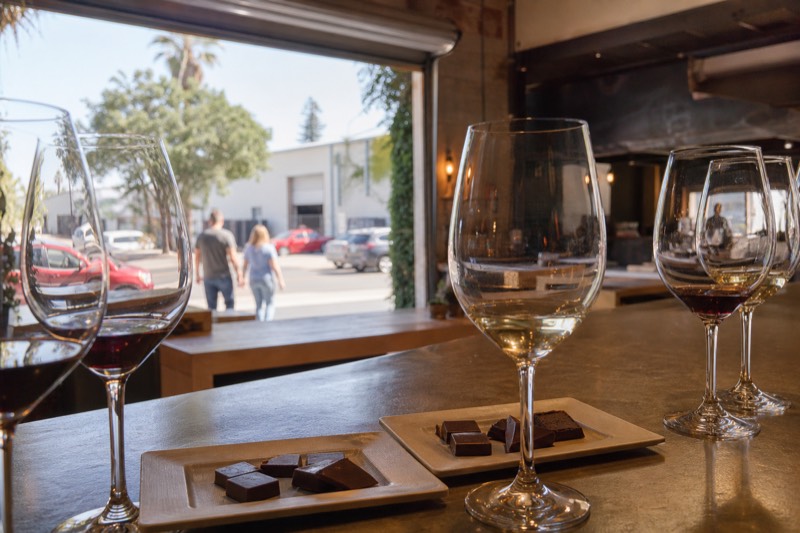
Funk Zone Wine, Chocolate & History Walk
from $135 · 4 reviews on the listing · About 2 to 3 hours
The exact-fit Funk Zone afternoon: several walkable rooms, chocolate pairings and the district's history folded into one from-$135 booking, with no car involved.
A newer listing with a light review history, and the walk covers downtown rooms only, not the valley estates where the wine actually grows.
Compare two alternatives inside this module
Santa Barbara Sparkling Wine Walking Tour
All-Inclusive Santa Ynez Valley Wine Tour
Tailor the pick: what you want from the afternoon
One question, honest matches from the real listings. General guidance, not live inventory: confirm dates and restrictions on the listing.
Funk Zone Wine, Chocolate & History Walk
The exact-fit Funk Zone afternoon: several walkable rooms, chocolate pairings and the district's history folded into one from-$135 booking, with no car involved.
Cost check: compare a self-guided crawl with the guided walk
Enter your own totals in dollars; the site does not invent prices. Count flights, food and any bottles on the self-guided side.
The walk folds several pours, the chocolate and the route into one price, so the difference shows what the curation adds or saves. Check dates on the listing before you decide; nothing is charged on this site.