Why is it called the Funk Zone in Santa Barbara?
Why the Funk Zone got its name, where it is, what the Urban Wine Trail is, and how a gritty industrial district near the Santa Barbara waterfront became a wine hub.
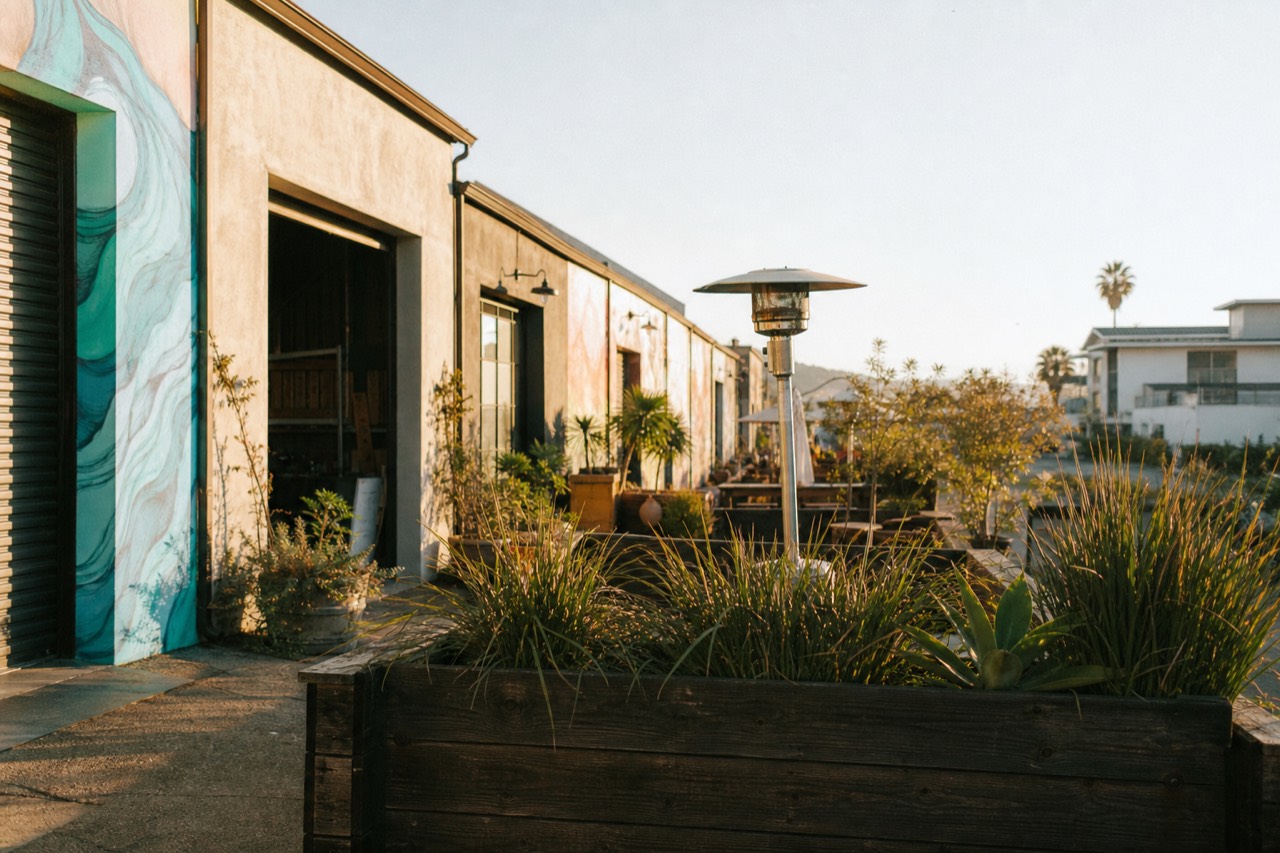
About twenty tasting rooms sit packed into roughly thirteen blocks between Highway 101 and the Santa Barbara waterfront, and the whole district is named after a word that started as an insult. The Funk Zone is now one of California's more walkable wine neighborhoods, a place where you can step off the train, taste at a run of rooms, and never touch a car. The name, though, is older than the wine, and it is not a compliment anyone planned to keep.
The Funk Zone got its name from the neighborhood's gritty, run-down past. Before the tasting rooms and murals arrived, it was a low-rent industrial pocket near the waterfront full of warehouses, auto shops, light manufacturing and artists' studios. Locals called it funky, in the offbeat and slightly shabby sense, and the nickname stuck as the district reinvented itself into a wine and arts hub.
So the name is a nickname, not an official designation, and it carries the memory of what the place used to be. This post traces where the Funk Zone name really comes from, where the district sits, what the Urban Wine Trail actually is, how a block of warehouses became a wine destination, and the easiest way to taste your way through it today.
Why is it called the Funk Zone in Santa Barbara?
The name comes from the neighborhood's funky, low-rent industrial character before it gentrified. For decades it was a working district of warehouses, mechanics, light industry and cheap studio space near the harbor, considered rough and offbeat rather than desirable. The word funky captured that gritty, unpolished feel, and the informal nickname endured even after wineries, galleries and restaurants moved in.
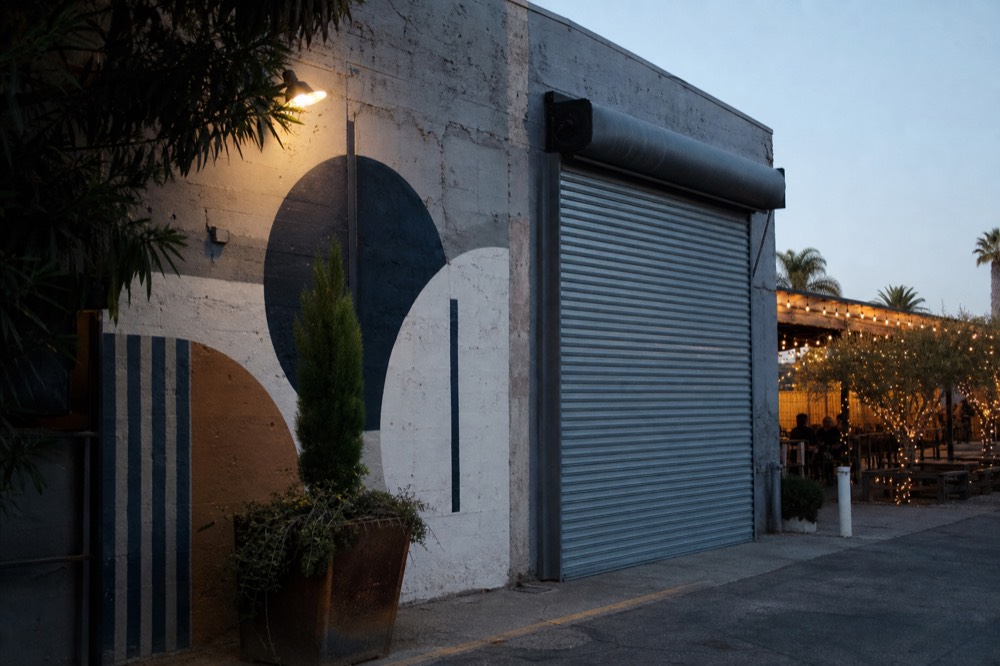
The word funky is doing a lot of work here, and it helps to hear it the way locals meant it. This was not funky as in cool or fashionable, at least not at first. It meant run-down, a bit shabby, unglamorous, the sort of place with roll-up doors, oil stains and cheap rent that respectable Santa Barbara did not think about much. That low-rent character is exactly what made the area available to artists and small makers, who took the cheap studio space precisely because nobody else wanted the blocks by the freeway.
Over time the meaning of the nickname flipped without the word changing. As galleries, tasting rooms and restaurants filled the old industrial shells, funky came to read as characterful and creative rather than derelict, and the district leaned into the name it once could not shake. That arc, from insult to identity, is common in neighborhoods that gentrify around an arts scene, and Santa Barbara's version kept the raw industrial bones visible on purpose. The table below sums up the two lives of the word.
| The name over time | What "funky" meant | What was there |
|---|---|---|
| The old district | Run-down, low-rent, offbeat | Warehouses, auto shops, studios |
| The transition | Gritty but creative | Artists and galleries move in |
| The Funk Zone today | Characterful, walkable, cool | Tasting rooms, murals, restaurants |
For the practical companion to this history, our guide to walking the downtown wine trail maps the current rooms and route, and the wider look at how a tasting day works here covers fees, flights and etiquette before you go.
Where is the Funk Zone, and what is there?
The Funk Zone is a compact district of about thirteen blocks in downtown Santa Barbara, wedged between Highway 101 and the beachfront, right by the harbor and the Amtrak station. It packs around twenty walkable tasting rooms along the Urban Wine Trail into a small area, alongside galleries, breweries, restaurants and street murals, all reachable on foot with no car needed.
Location is a big part of why the Funk Zone works. It sits in the wedge of downtown between the freeway and the ocean, so you can walk to it from the waterfront in minutes, and the Amtrak Pacific Surfliner stops right at its edge. That means visitors can arrive by train, spend an afternoon tasting, and leave without ever renting a car, which is unusual for a California wine experience and a real point in the district's favor.
Inside those blocks, the density is the appeal. According to the Urban Wine Trail's own map, around twenty tasting rooms cluster in and around the neighborhood, most of them within an easy stroll of each other. Between the rooms you find galleries, a brewery or two, restaurants, coffee and the murals that give the place its Instagram reputation. It is a wine district you can experience like a walking neighborhood rather than a driving route. The table below lays out what the Funk Zone actually holds.
| Feature | The detail | Why it matters |
|---|---|---|
| Size | About 13 walkable blocks | You cover it on foot |
| Location | Between Highway 101 and the beach | Minutes from the waterfront |
| Getting there | Beside the Amtrak station | Arrive without a car |
| Tasting rooms | Around 20 on the Urban Wine Trail | Dense, walkable cluster |
| Also there | Galleries, breweries, restaurants, murals | More than just wine |
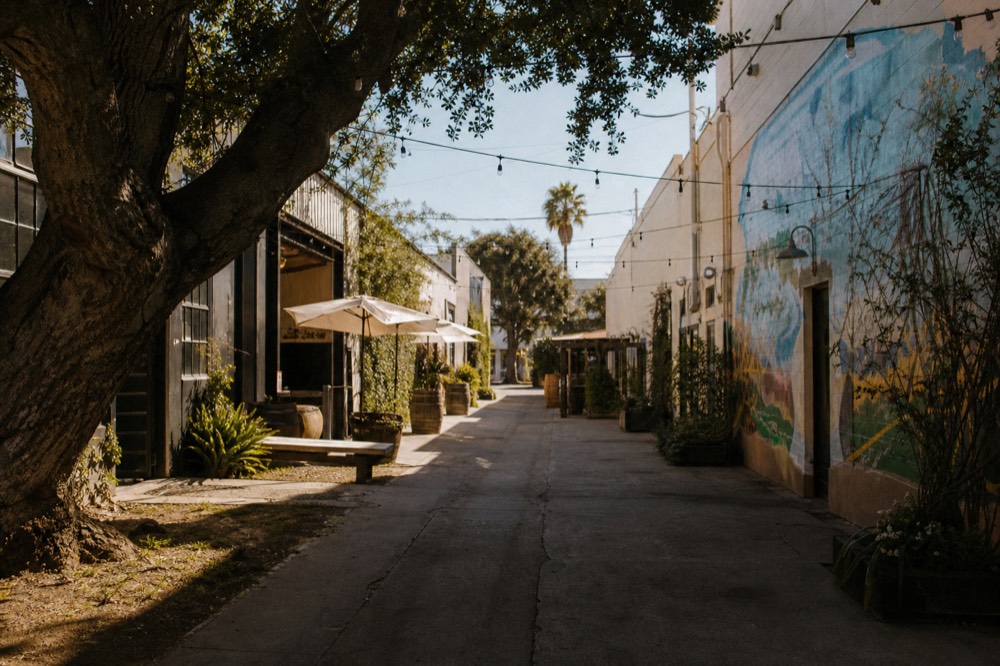
Because the whole district is walkable, a sparkling-wine walking tour is a natural way to see it, threading several rooms into one route. If your interest runs to the wider downtown scene, our guide to the full downtown wine trail extends beyond the Funk Zone's core.
What is the Santa Barbara Urban Wine Trail?
The Santa Barbara Urban Wine Trail is a self-guided route linking around twenty tasting rooms across downtown Santa Barbara, most of them clustered in the Funk Zone near the waterfront. It lets visitors taste wines made from Santa Barbara County grapes without leaving the city, walking between rooms rather than driving out to the vineyards inland.
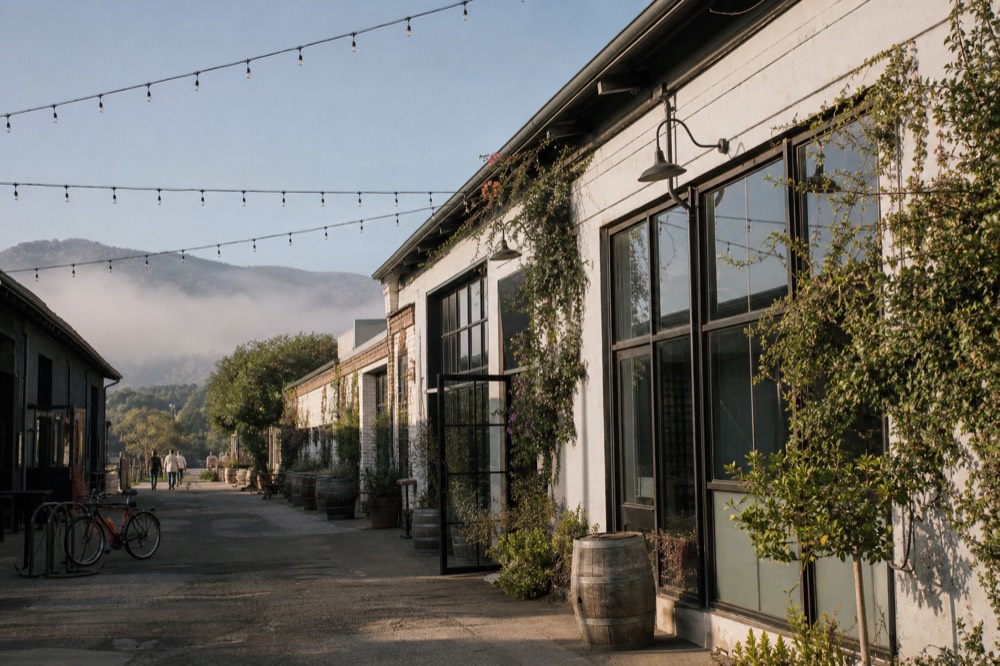
The Urban Wine Trail is the organizing idea that turns a scattering of downtown tasting rooms into a coherent wine experience. The rooms pour wine made from grapes grown out in the county's inland appellations, but the tasting happens in the city, in converted industrial spaces a short walk from the beach. That split, vineyards inland, tasting rooms downtown, is the whole premise, and it is what makes a car-free wine day possible in Santa Barbara.
For visitors, the trail is less a fixed path than a permission slip to wander. You pick a few rooms, walk between them, and let curiosity set the route. It suits a half day, a rainy afternoon, or anyone without a car, and it is the low-effort counterpart to a full day out in the valley. The trade-off is that these are tasting rooms, not estates among the vines, so you get the wine and the city, not the vineyard views. The table below sets the downtown trail against the inland valley.
| Consideration | Funk Zone Urban Wine Trail | Santa Ynez Valley |
|---|---|---|
| Setting | Downtown converted warehouses | Vineyards and ranch estates |
| Getting there | Walk or arrive by train | About 40 minutes inland |
| Car needed | No | Yes, or a driver |
| Time needed | Half a day | A full day |
| Best for | A car-free city afternoon | The full wine-country day |
The county's grapes come from more than 250 wineries across the county, and the Funk Zone is where a good slice of that wine reaches the city. If you would rather taste out among the actual vines, our overview of how the valley tour days compare covers the inland option in full.
How did a warehouse district become a wine hub?
The Funk Zone followed a familiar arc: cheap industrial space near the waterfront drew artists and small makers, galleries and studios gave the area cachet, and tasting rooms moved into the old warehouses as urban wine took off. The result is a wine hub built inside a former industrial neighborhood, with the raw brick and roll-up doors kept as part of the look.
The transformation was not planned so much as compounded. It started with rent. The blocks by the freeway were cheap because they were industrial and unfashionable, which made them exactly the kind of place a painter or a small winemaker could afford a space. Artists came first, galleries followed, and the neighborhood picked up a creative reputation that made it interesting rather than just cheap.
Wine arrived on the back of that. Winemakers with grapes from the inland county needed a place to pour in the city, and the Funk Zone's warehouses were affordable, central and walkable from the tourist waterfront. As rooms opened, more followed, and the district tipped from an arts pocket into a genuine wine destination. The industrial shell stayed, which is part of the charm: the tasting rooms sit inside old workshops rather than purpose-built cellars. That scene keeps evolving, too, with rooms opening and closing as leases and tastes shift.
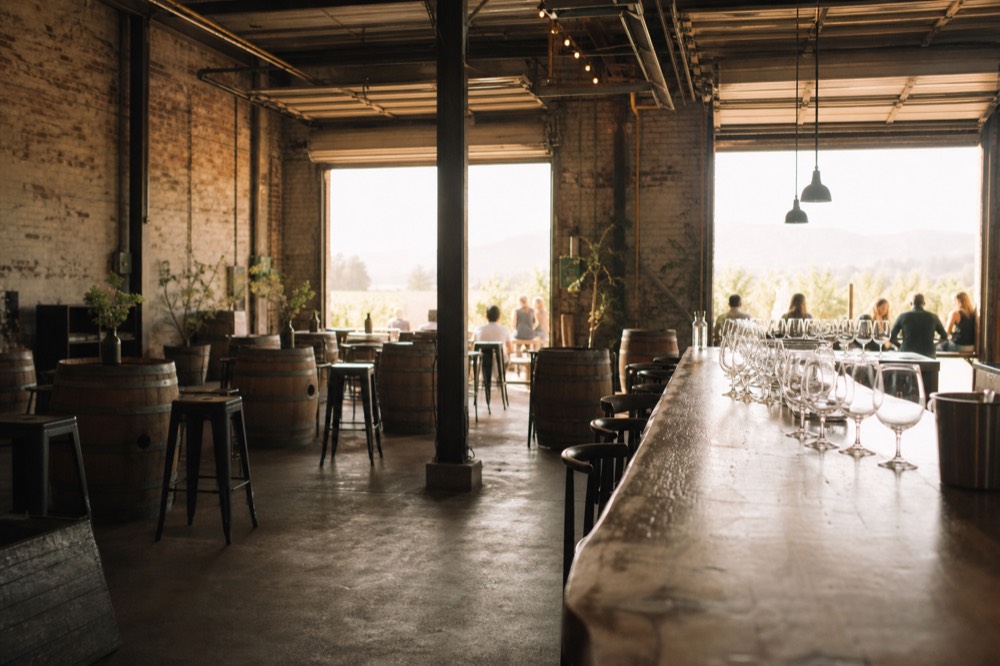
The churn is real and worth knowing before you rely on any single room being open. A couple of Funk Zone tasting rooms closed over the 2025 to 2026 winter even as new wine spaces opened elsewhere in the area, which is why a current map beats an old list. Santa Barbara's tourism office keeps a working overview of the district on the city's official visitor site. For the money side of a downtown day, our post on what a tasting day really costs counts the fees room by room.
Is the Funk Zone worth visiting, and how do you do it?
Yes, the Funk Zone is worth visiting, especially if you want wine without a drive. Around twenty walkable tasting rooms, galleries and restaurants sit within a few blocks of the waterfront and the train, so you can taste on foot in an afternoon. A guided walking tasting is the easiest way in, since it books the rooms, sets a route, and adds the neighborhood's backstory.
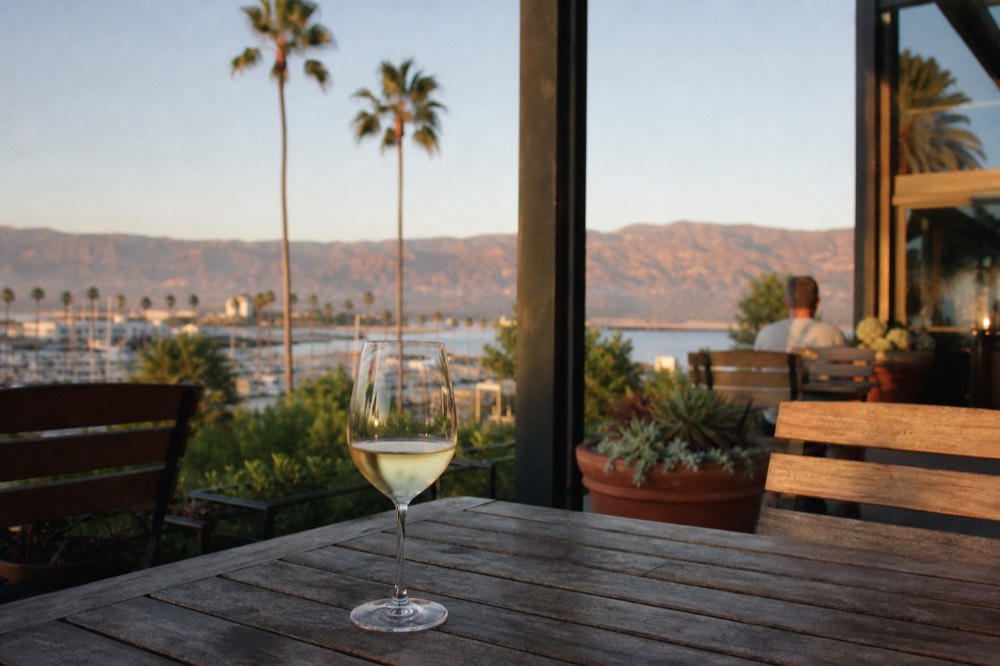
The Funk Zone earns a visit on convenience alone. Few wine experiences let you arrive by train, taste at a handful of rooms, eat well and wander galleries, all on foot, all in a compact district by the beach. For anyone short on time or without a car, it is the most accessible way to taste Santa Barbara County wine, and the industrial-cool setting gives it a character the polished valley estates do not have.
Doing it well is mostly about the route. You can freestyle it, walking room to room as the mood takes you, and the walk-in-friendly downtown rooms make that easy outside peak times. Or you can take a guided walking tasting, which links several rooms into one arranged route, folds the fees into a single price, and layers in the history of the district as you go. This is the approach we lean toward at Santa Barbara Wine Tours: point you at the real, walkable day rather than a generic one. The guided wine, chocolate and history walk, from $135, is the one to check the dates and what it covers on the operator's live listing. The table below lays out how to do the Funk Zone.
| Approach | What it is | Good to know |
|---|---|---|
| Self-guided wander | Walk room to room yourself | Walk-in friendly, most flexible |
| Wine and history walk | Guided route with pours and chocolate, from $135 | Fees and story in one price |
| Sparkling-wine walk | Guided sparkling-focused route, from $135 | A themed take on the district |
| Reserve ahead | Book popular rooms and groups | Weekends and events get busy |
If you decide the downtown scene is not enough and you want the actual vineyards, the cheapest guided way out to the valley is a shared shuttle from the city, from $139, which handles the driving up over the pass while you pay each tasting at the door. On reservations for either option, our post on whether you need to book ahead breaks it down by area and winery type.
The name may have started as a knock on a shabby industrial block, but the Funk Zone wears it as a badge now. The guided walks and the shuttle above cover both ways to taste it, on foot downtown or out among the vines.
Common questions about the Funk Zone
Why is it called the Funk Zone in Santa Barbara?
The name comes from the neighborhood's gritty, low-rent industrial past. Before the tasting rooms arrived, it was a district of warehouses, auto shops and cheap studios near the waterfront that locals called funky, in the run-down and offbeat sense. The nickname stuck as the area became a wine and arts hub.
Where is the Funk Zone in Santa Barbara?
The Funk Zone is a compact district of about thirteen blocks in downtown Santa Barbara, between Highway 101 and the beachfront, right by the harbor and the Amtrak station. It is fully walkable and reachable on foot from the waterfront in minutes, no car needed.
What is there to do in the Funk Zone?
The Funk Zone packs around twenty walkable tasting rooms along the Urban Wine Trail into a few blocks, alongside galleries, breweries, restaurants, coffee and street murals. It is a wine district you can experience like a walking neighborhood, tasting on foot without a car.
What is the Santa Barbara Urban Wine Trail?
It is a self-guided route linking around twenty downtown tasting rooms, most clustered in the Funk Zone. The rooms pour wine made from Santa Barbara County grapes grown inland, so visitors can taste county wine in the city, walking between rooms rather than driving to the vineyards.
Can you walk between wineries in the Funk Zone?
Yes. That is the whole point of the district. The tasting rooms sit within a few walkable blocks of each other, so you can stroll between them without a car. It contrasts with the inland Santa Ynez Valley, where the estates are dispersed and need a driver or a tour.
Is the Funk Zone worth visiting for wine?
Yes, especially for a car-free afternoon. Around twenty walkable rooms near the waterfront and the train make it the most accessible way to taste Santa Barbara County wine. A guided walking tasting books the rooms, sets a route and adds the neighborhood's history, which is an easy way in.
Taste The Funk Zone On A Guided Walk
Have a travel date in mind? Check walk dates and availability now, before arranging the rest of the trip. Nothing is charged on this site, and most listings cancel free up to 24 hours out.
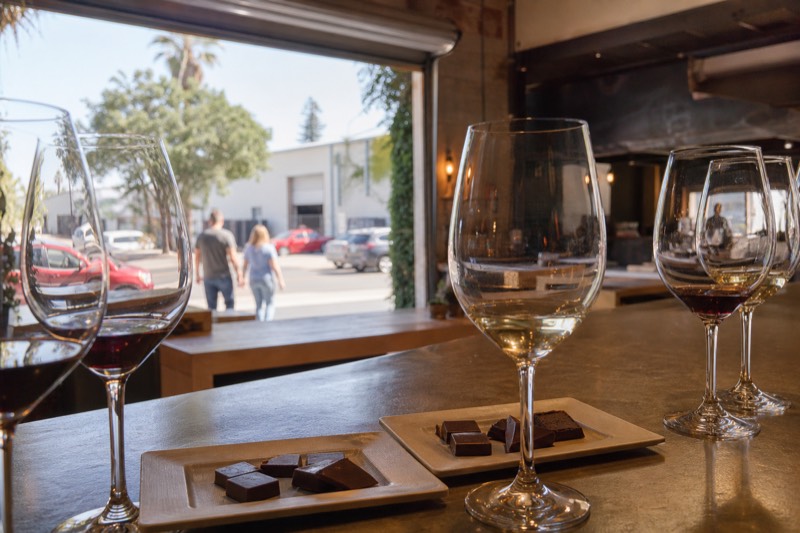
Funk Zone Wine, Chocolate & History Walk
from $135 · 4 reviews on the listing · About 2 to 3 hours
The district's story on foot: a guided walk that threads several Funk Zone tasting rooms into one route, with wine, chocolate pairings and the neighborhood history.
It is a newer listing with a small review sample, and it runs about two to three hours rather than a full valley day.
Compare two alternatives inside this module
Santa Barbara Sparkling Wine Walking Tour
Santa Ynez Valley Wine Shuttle
Tailor the pick: what kind of tasting day you want and how you get around
Two questions, honest matches from the real listings. General guidance, not live inventory: confirm dates and restrictions on the listing.
Funk Zone Wine, Chocolate & History Walk
The district's story on foot: a guided walk that threads several Funk Zone tasting rooms into one route, with wine, chocolate pairings and the neighborhood history.