Which winery in Santa Barbara has the best view?
Santa Barbara wine country tilts toward the Pacific, so many estates have wide views. Here is how to find the best one for the view you actually want.
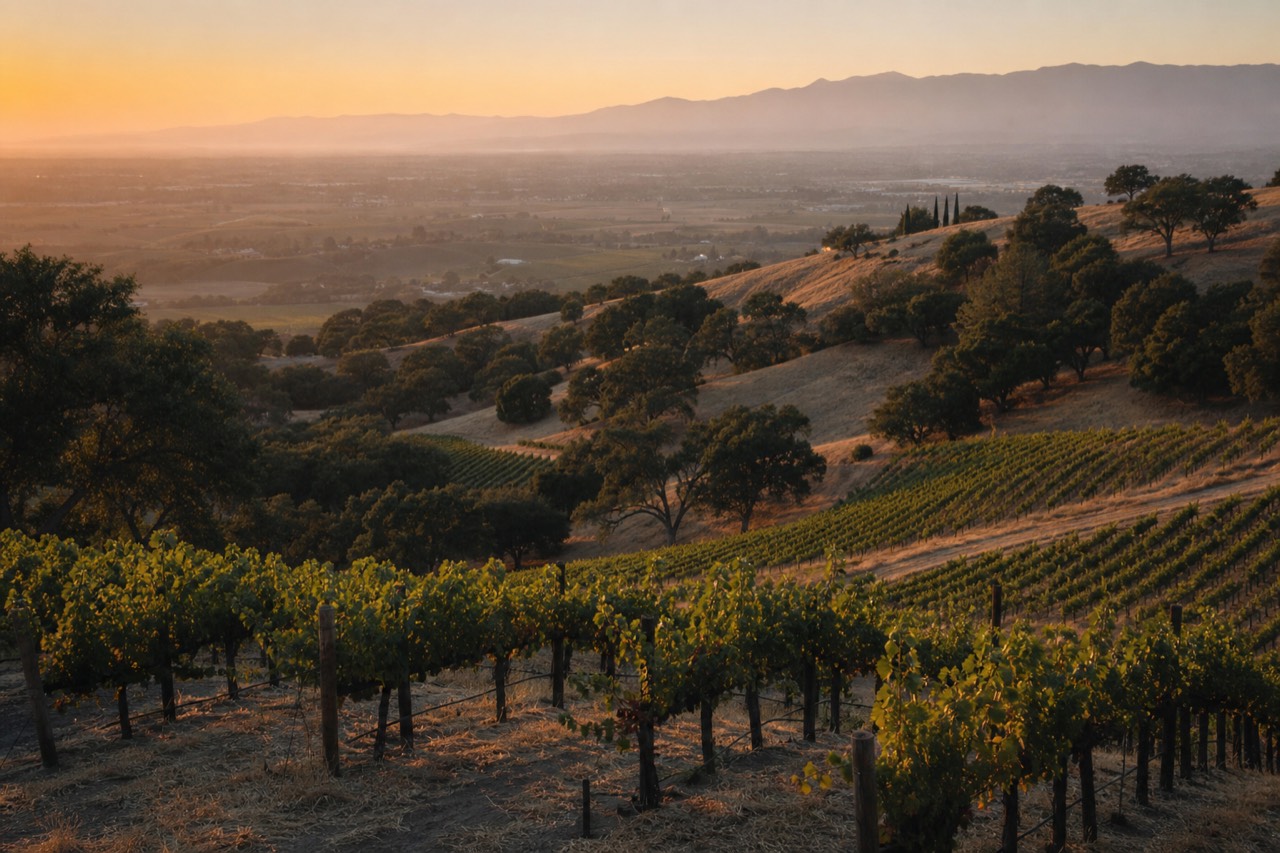
Santa Barbara County farms roughly 11,000 harvested vineyard acres, and almost none of them lie flat. The land tilts, folds and climbs across a run of oak-dotted hills that lean toward the Pacific, and that tilt is the whole reason people arrive asking which winery has the best view. When the vineyards themselves are pitched across hillsides, the outlook is not an accident. It is built into the geography.
No single winery owns the best view in Santa Barbara wine country, because the best view depends on what you want to look at. Hilltop estates in the eastern valley deliver wide panoramas, the western Sta. Rita Hills give you fog rolling over vine rows, and the oak-savanna canyons offer rolling green. Your best view is a choice, not a ranking.
So this is not a countdown to one winning terrace. It is a map of what kind of view sits where, why the land looks the way it does, and how to actually reach the estates that hold the panoramas, since most of them are scattered along ranch roads that were never built for a self-driven tasting day. Get the view type right first, and the specific room almost picks itself.
Which winery in Santa Barbara has the best view?
There is no official best view, and any honest answer starts there. The valley's rolling estates mean dozens of tasting rooms look out over vines and hills, so the real question is which kind of view you want: a high panorama, a fog-cooled coastal slope, or a green canyon. Pick the type, and you narrow hundreds of options down to a handful.
People expect a single name, and the region will not give them one. What it gives instead is variety, because the county stacks seven federally recognized growing areas across a short drive, each with its own light, elevation and mood. An estate perched on the warm eastern edge frames a wide valley with mountains behind it. A room out west near the coast looks over vine rows that vanish into morning fog. A canyon winery sits low among oaks with green hills rising on every side. All three are stunning, and none of them is the same picture.
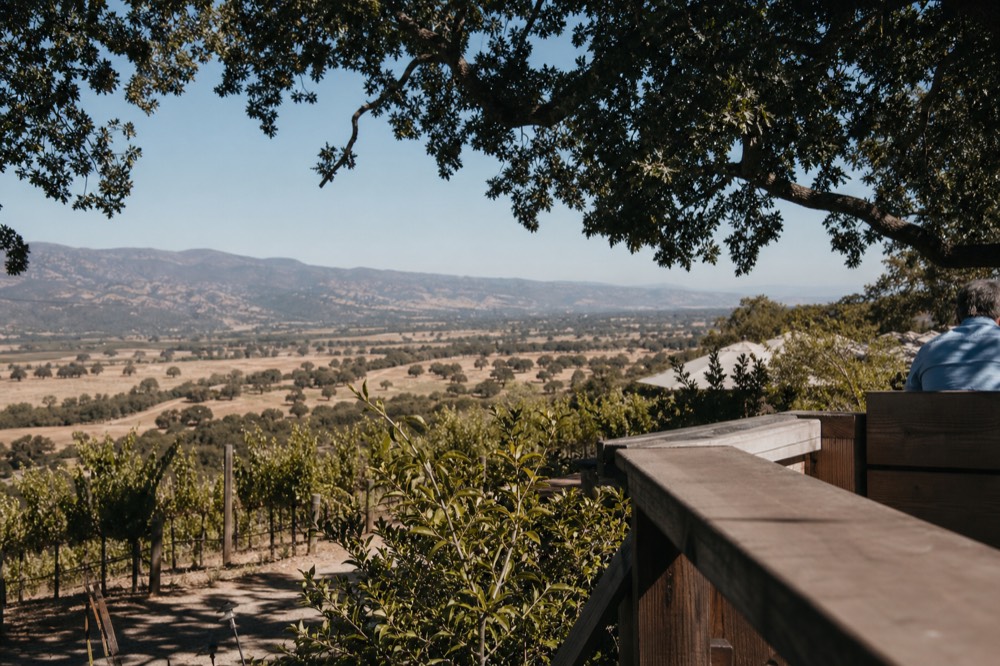
The other reason we will not crown one winery is honesty. Views are subjective, tasting rooms change hands, and the estate that had an open hilltop patio last season may have added a marquee or closed for a private event this one. What does not change is the shape of the land. So the useful thing we can hand you is a sorting system, not a leaderboard, plus the real tours that reach the hillside rooms. The fast version of the view question is a sorting decision plus one bookable day; the panel below carries the date check for the top-rated way up to the hillside rooms.
What makes Santa Ynez Valley views so dramatic?
The valley's mountains run east to west, which is rare on the West Coast where ranges usually run north to south. Those transverse ranges open straight to the ocean and funnel cool marine fog inland, carving a temperature gradient from cool coast to warm interior. The result is oak-savanna hills, layered light and the fog that gives the western vineyards their drama.
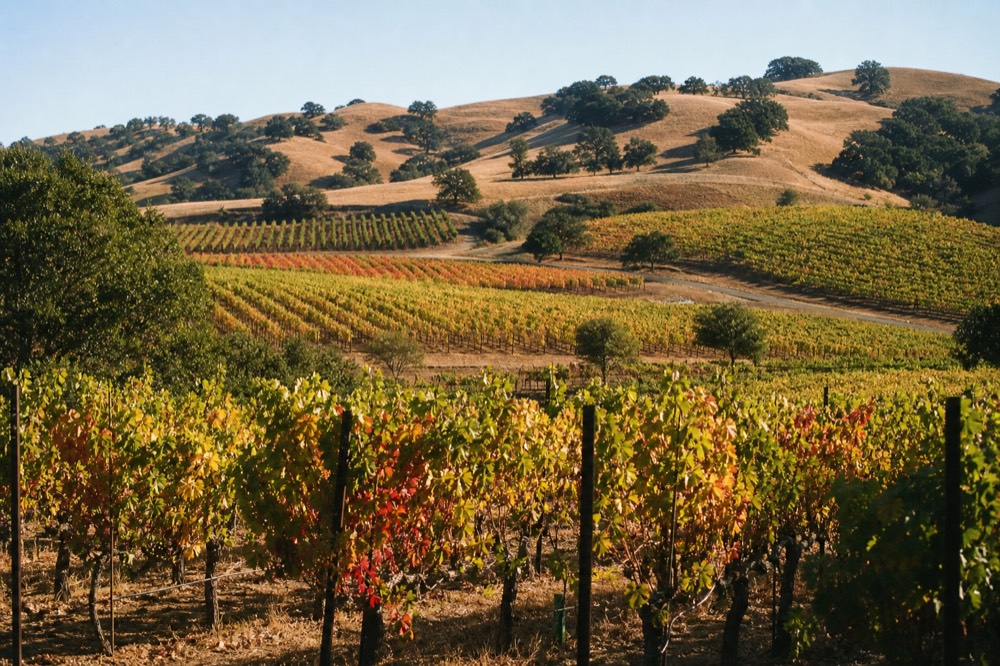
This is the geological hook almost no other California wine region has. When mountains sit sideways to the coast, the valleys between them act like funnels, pulling ocean air and fog deep inland every morning before the sun burns it off. That daily rhythm cools the western end hard and leaves the eastern end warm, and you can read the whole story in the landscape as you drive it. Near the coast the hills stay green longer and the fog lingers over the rows. Move east and the light turns golden, the oaks spread out across dry-grass slopes, and the mountains stand up sharp behind the vines.
The county government carves this gradient into seven recognized appellations, and each one photographs differently because each one sits at a different point on that cool-to-warm run. That is why a single day here can show you three or four distinct landscapes without ever leaving the valley. If you want to understand where each of those growing areas sits and how they connect, our orientation map of the wine country lays out the geography before you plan a route. An e-bike day is one of the better ways to actually feel the terrain rather than watch it through glass, since you ride the contours the vineyards are planted on.
Where are the best hilltop and vineyard views by area?
Each growing area frames a different view. The eastern Happy Canyon and Foxen Canyon country gives high, wide panoramas with mountain backdrops. Ballard Canyon rolls in Rhone-country green. The western Sta. Rita Hills delivers fog over Burgundian vine rows. Los Olivos and Solvang trade sweeping outlooks for walkable village-and-vineyard charm.
If you are choosing a room for the outlook, it helps to think by area rather than by winery, because the land dictates the view more than any single estate does. The warmer, higher eastern edge tends to hand you the postcard panorama, the classic sweep of vines running down to a valley floor with ranges behind. The cooler western hills give you a moodier, foggier scene that many people find more atmospheric, especially early. And the walkable towns give up the grand vista in exchange for something easier: rooms you can stroll between with vineyards visible at the edges of town.
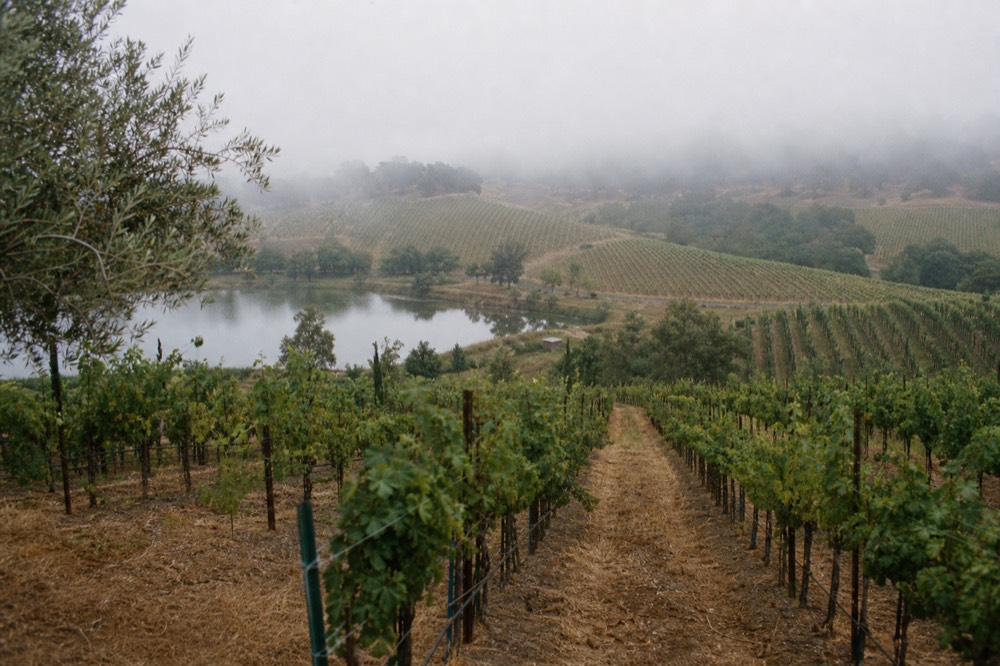
The table below sorts the county's areas by the kind of view each one is known for, the grape you are most likely to be drinking while you look at it, and who each outlook suits. Treat it as a way to match your mood to a region, then let a guide fill in the specific rooms open on your date.
| Area | The view | Signature grape | Best for |
|---|---|---|---|
| Happy Canyon (east) | High, warm panoramas, mountain backdrops | Cabernet and Bordeaux reds | Wide sweeping vistas |
| Foxen Canyon | Open ranch country, rolling vineyard hills | Pinot, Chardonnay, Syrah | Classic wine-country postcard |
| Ballard Canyon | Rolling green Rhone country, mid-valley | Syrah and Rhone varieties | Intimate hillside outlooks |
| Sta. Rita Hills (west) | Fog over Burgundian vine rows | Pinot Noir, Chardonnay | Moody, atmospheric mornings |
| Los Olivos and Solvang | Village streets, vineyards at the edges | The valley's full range | Walkable, no big drive |
One honest caveat sits under all of it. The county's vintners association publishes a winery count of more than 250, but it does not publish a ranked list of view rooms, and neither will we invent one. What we can say confidently is that the eastern and canyon estates hold most of the big outlooks, and those are exactly the rooms that sit farthest apart and hardest to reach on your own. For a fuller tour of the cool western appellation specifically, our guide to the Sta. Rita Hills wineries covers the fog country in detail, and the wider valley wineries guide maps the towns and estates together.
Are the best wine-country views in the valley or on the coast?
For vineyard views, the valley wins, because that is where the vines actually grow. The Santa Barbara city Funk Zone gives you a walkable cluster of tasting rooms near the waterfront, with ocean and harbor close by, but no vineyard panoramas. The inland Santa Ynez Valley, about 40 minutes over the pass, is where the hillside outlooks are.
This trips up a lot of first-time visitors, who assume the wine views are in the city because the city is where they are staying. Santa Barbara sits right on the ocean, and its downtown Funk Zone holds around 20 walkable tasting rooms in a compact district a short stroll from the harbor and the train station. That is a genuinely good time, and the coast is beautiful, but you are pouring wine that was trucked in from inland vineyards you cannot see. The grand vine-and-hill view people picture is 40 minutes away, over the mountains.
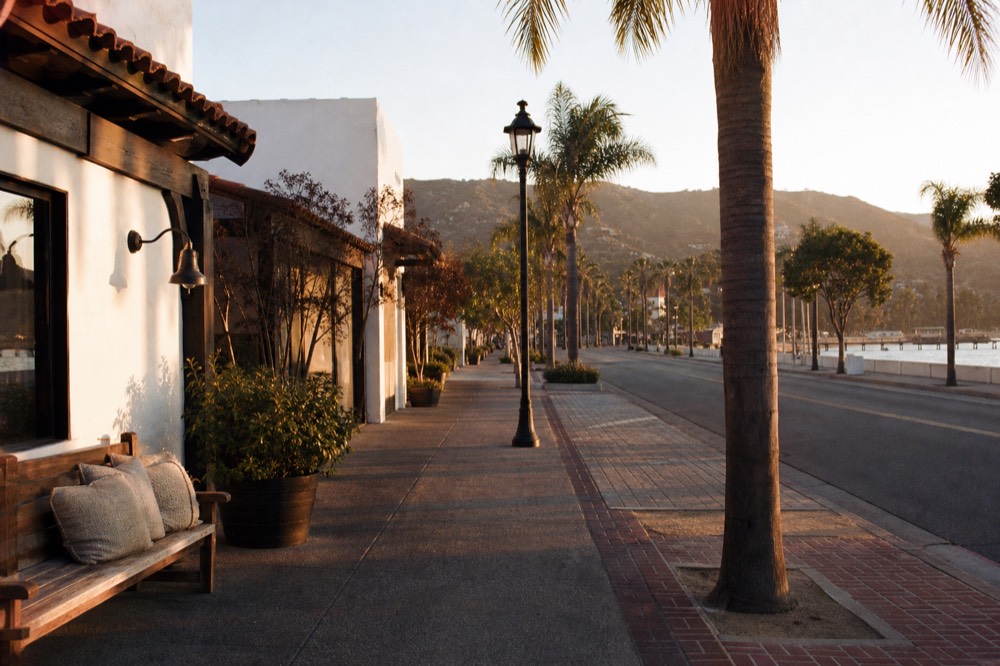
So the honest split is this. If your idea of the best view is the ocean and an easy walk between rooms, stay in the city and work the downtown trail, which our walk through the urban wine trail covers stop by stop. If your idea of the best view is vines running down a hillside under oaks, you are going inland, and you will want the driving handled because those estates are spread across ranch roads. The table below lays the two settings side by side so you can pick without a surprise.
| Santa Barbara city (Funk Zone) | Santa Ynez Valley (inland) | |
|---|---|---|
| The view | Waterfront, harbor, downtown streets | Vineyard hillsides, oaks, mountains |
| Getting around | Walkable, no car needed | Dispersed estates, driver needed |
| Distance from the coast | You are already there | About 40 minutes over the pass |
| Best for | Easy afternoon, ocean nearby | The classic vineyard panorama |
Most people who come specifically for the view end up inland, and that is where the designated-driver question becomes real, because a valley day means several stops spread far apart. That is the moment a guided all-inclusive day earns its keep: lunch and fees folded in, someone else on the passes, and you free to actually look at the view instead of the road.
How do you reach the view wineries without driving?
The best-view estates are the hardest to reach on your own, because they sit far apart on ranch roads with no walkable cluster between them. A tasting day crosses several stops, California's legal limit is 0.08 percent, and the valley is not walkable. A guided van, shuttle or e-bike day handles the driving and the reservations, so everyone can drink and look.
Here is the practical reality the postcards leave out. The rooms with the widest outlooks are usually the remote ones, up canyons and on hilltops, precisely because that is where the land opens up. Those same rooms increasingly want a reservation, they are miles apart, and stringing four of them together means real driving between pours. Do that yourself and someone stays sober, misses the wine, and spends the day watching the passes instead of the vineyards.
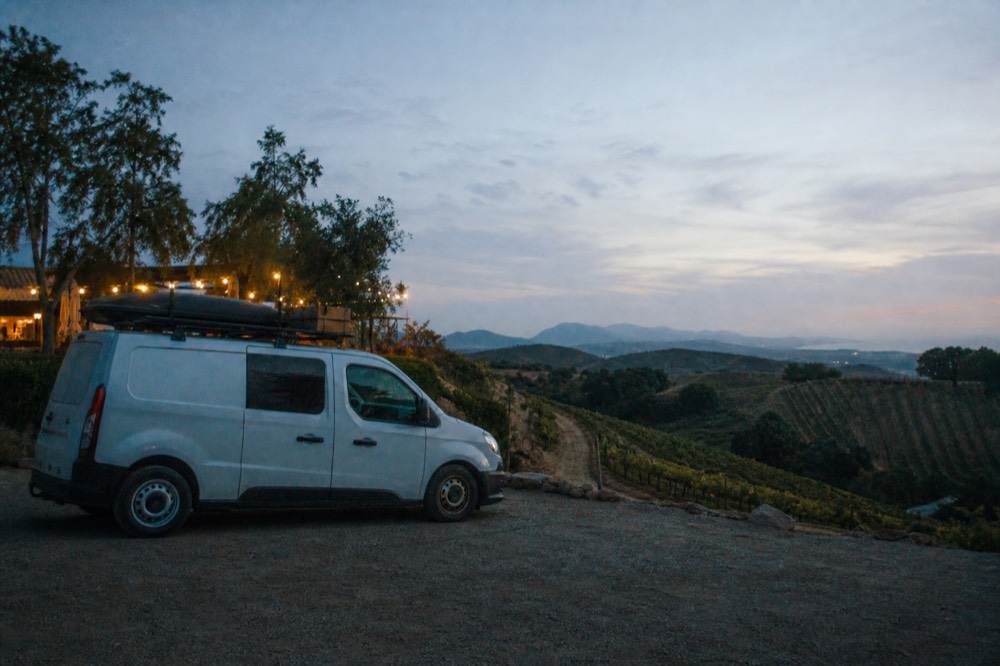
California sets the driving limit at 0.08 percent under the state vehicle code, and a tasting flight is four to six pours per room across three or four rooms, which climbs fast. A guided day removes the whole calculation. The van or shuttle does the roads, the guide holds the reservations, and you get the hilltop terrace with a full glass in hand. If you would rather see the wineries you might book side by side first, you can always check the dates and what it covers on the live listing before you commit. The door-to-door day below goes one step further and takes the car out of the whole day, lunch included.
When is the light best for wine-country views?
The clearest views come from September through November, when the summer haze lifts, the hills glow gold and harvest energy fills the rooms. Coastal mornings can bring "May Gray" and "June Gloom" fog that hangs over the western vineyards, which some people love for its mood. Late afternoon, near golden hour, flatters every outlook in the valley.
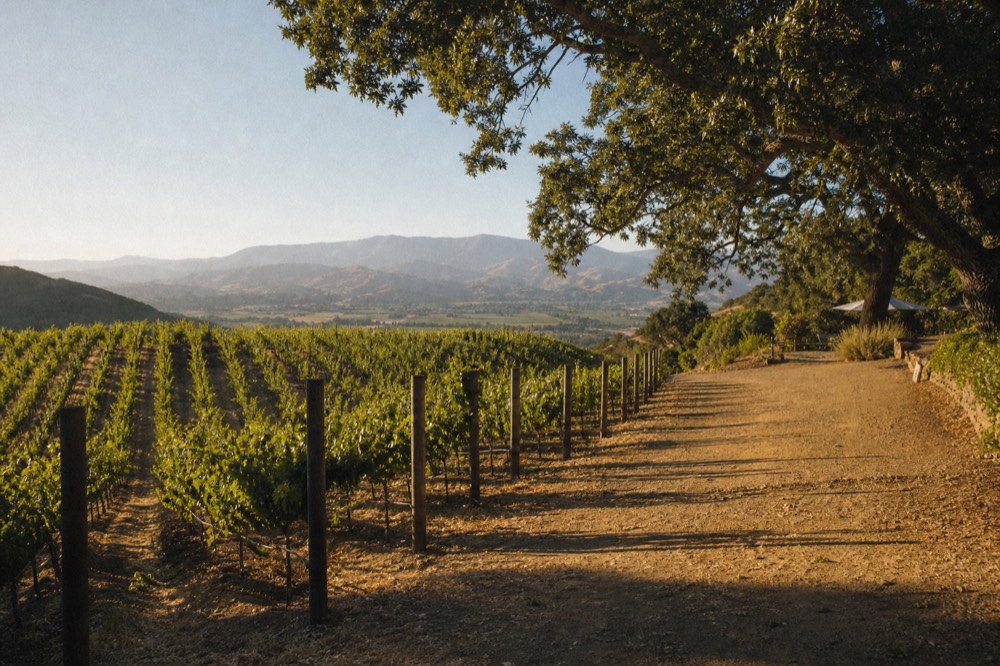
Timing shapes the view as much as location does. Fall is the sweet spot for the wide, sharp panoramas, because the marine layer that blurs summer afternoons has mostly cleared and the light turns warm and long. The hills that were dry-gold all summer take on a deeper color as the season turns, and the rooms hum with the smell of crush. That combination of clean air, low sun and working vineyards is why photographers and view-seekers cluster into those months.
The fog is not the enemy, though, and it is worth saying so. On the cool western end near the coast, that morning marine layer draped over the vine rows is one of the most atmospheric sights the region offers, and it is a big reason the Pinot Noir out there tastes the way it does. If a moody, soft-lit vineyard is your idea of beautiful, the western hills on a June morning may beat any sharp fall panorama. For a full month-by-month read on weather, crowds and harvest, our post on the best month to visit the wine country breaks down the trade-offs, and if outright prettiness is your yardstick, the roundups of the prettiest vineyard in the valley and the most beautiful wineries across the county go deeper on scenery than logistics.
The table below matches the season to what the light does, the kind of view it rewards, and how busy the rooms tend to be, so you can time a visit to the outlook you want.
| Season | The light | View payoff | Crowds |
|---|---|---|---|
| September to November | Clear, golden, low sun | Sharp wide panoramas, fall color | Eases after Labor Day |
| June to August | Bright but often hazy | Softer distant views, warm haze | Peak visitor season |
| Late spring mornings | Coastal "May Gray" fog | Moody, soft-lit western vineyards | Moderate |
| Winter | Crisp and green after rain | Deep-green hills, clean air | Quietest of the year |
Once you have picked your season and your kind of view, the last step is just booking a day that reaches the hillside rooms. That is what we do at Santa Barbara Wine Tours: point you at the real, currently bookable day that gets you to the outlook you came for, not a staged version of it. The booking module at the foot of this page lays the days side by side, from the most-reviewed all-inclusive tour to the top-rated picnic day and the e-bike ride that puts you out among the vines.
Common questions about Santa Barbara winery views
Which winery in Santa Barbara has the best view?
There is no single best-view winery, because the county's rolling vineyards give dozens of estates wide outlooks. The best view depends on the type you want: high panoramas in the eastern canyons, fog over vine rows in the western Sta. Rita Hills, or rolling green in the mid-valley canyons. A guided day is the practical way to reach the hilltop estates that hold the biggest views.
Are the best vineyard views in Santa Barbara city or inland?
The vineyard views are inland in the Santa Ynez Valley, about 40 minutes over the mountains, where the vines actually grow. The Santa Barbara city Funk Zone has around 20 walkable tasting rooms near the waterfront, but its views are of the harbor and downtown, not vineyards.
When is the light best for wine-country views?
September through November brings the clearest air, golden hills and harvest energy, which suits the wide panoramas best. Coastal mornings in late spring and early summer bring fog over the western vineyards, which many visitors find more atmospheric. Late afternoon flatters almost any outlook.
Why does Santa Ynez Valley have such dramatic scenery?
Its mountains run east to west, unusually for the West Coast, and open straight to the ocean. That funnels cool fog inland and creates a cool-to-warm gradient of oak-savanna hills, layered light and fog-draped western slopes, which is what gives the valley its varied, photogenic landscapes.
Do I need a tour to reach the best-view wineries?
You do not strictly need one, but the estates with the widest views sit far apart on ranch roads and increasingly want reservations, and a tasting day crosses several stops where California's 0.08 percent limit adds up. A guided van, shuttle or e-bike day handles the driving and the bookings so everyone in your group can taste and enjoy the view.
Book Your Day On The View Route
Have a travel date in mind? Check availability on the valley-view days now, before arranging the rest of the trip. Nothing is charged on this site, and most listings cancel free up to 24 hours out.
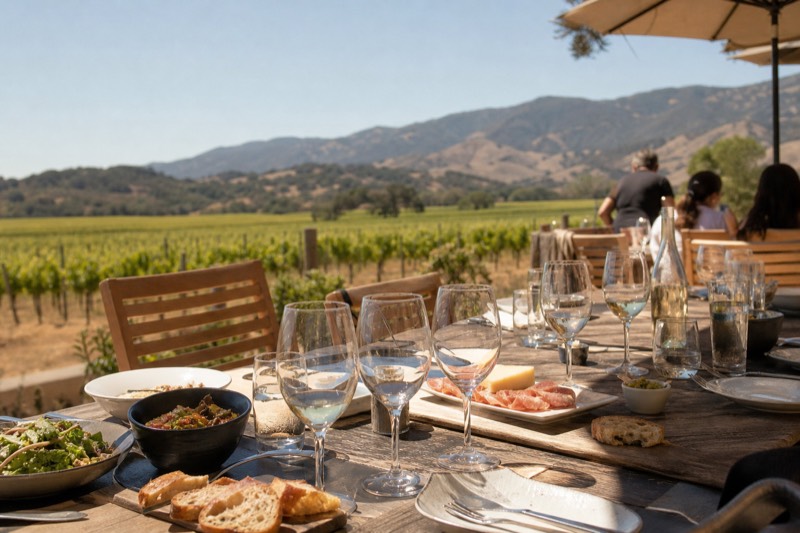
All-Inclusive Santa Ynez Valley Wine Tour
★ 4.8 (245 reviews) · About 5 hours
The from-city day that reaches the dispersed valley estates, with lunch and every tasting fee folded into one price and a local guide on the passes.
A shared five-hour route rather than a custom list of outlooks; choose the private day if you want specific rooms decided by you.
Published schedule only: final availability and price are confirmed on the listing.
Compare two alternatives inside this module
Santa Ynez Valley: 3-Winery Tour with Picnic Lunch
Vineyard-to-Table Wine Tour by E-Bike
Tailor the pick: where you start and how you want to take in the view
Two questions, honest matches from the real listings. General guidance, not live inventory: confirm dates and restrictions on the listing.
All-Inclusive Santa Ynez Valley Wine Tour
The from-city day that reaches the dispersed valley estates, with lunch and every tasting fee folded into one price and a local guide on the passes.